Local SEO and Google Maps
Why your Google reviews disappeared, and how to get more that stick
Why Google reviews disappear, which ones come back, the Google rules many honest owners break, and how to get more reviews that stick.
· Updated · 6 min read
In this story
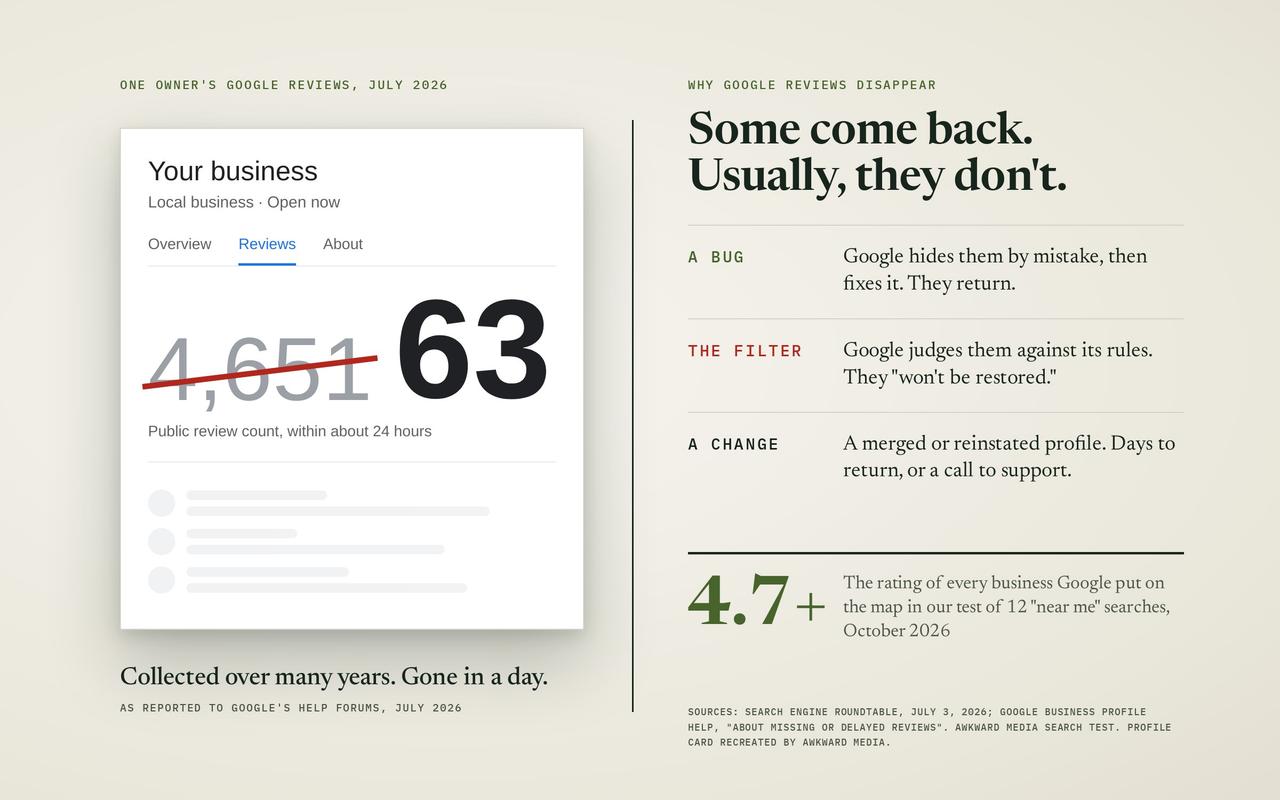
For years, one business owner did what every marketing guide says to do. They asked customers for reviews, and the customers obliged: about 4,651 of them, by the owner's count, "collected naturally over many years from real customers." Then, in the first days of July 2026, the public count on the owner's Google listing fell to 63. It took about a day.
The owner was not alone. Complaints piled up in Google's help forums that week, enough that Search Engine Roundtable, which covers the search industry, collected them and asked Google what was going on. A spokesperson said that when its systems detect suspicious reviews, Google takes "a range of actions including removing reviews and temporarily pausing reviews" on a profile. The company said it was investigating and would restore reviews it had removed by mistake. Later, word came from Google that the problem was fixed and the missing reviews should be visible again.
That owner got lucky. Most owners who lose reviews never see them again, and the reason is spelled out on Google's own help page: "Reviews removed for policy violations won't be restored." Google's advertising estimates suggest someone searches for "Google reviews removed" about 3,600 times a month in the United States and 720 times a month in Canada. Behind most of those searches is the same mix of panic and confusion, and the same question. Was it a glitch, or did we do something wrong?
Three ways a review disappears
A review that vanishes has usually gone one of three ways, and they end very differently.
The first is a bug. Google's systems are vast and they break, and when they do, reviews can drop out of sight for thousands of businesses at once. The July 2026 episode was one. Another came in early 2023, when Google admitted that its protections "took down more than expected policy abiding reviews" from a group of its Local Guides, the volunteers who review places on Maps, and said it would reinstate them. When the cause is a bug, the reviews tend to come back on their own.
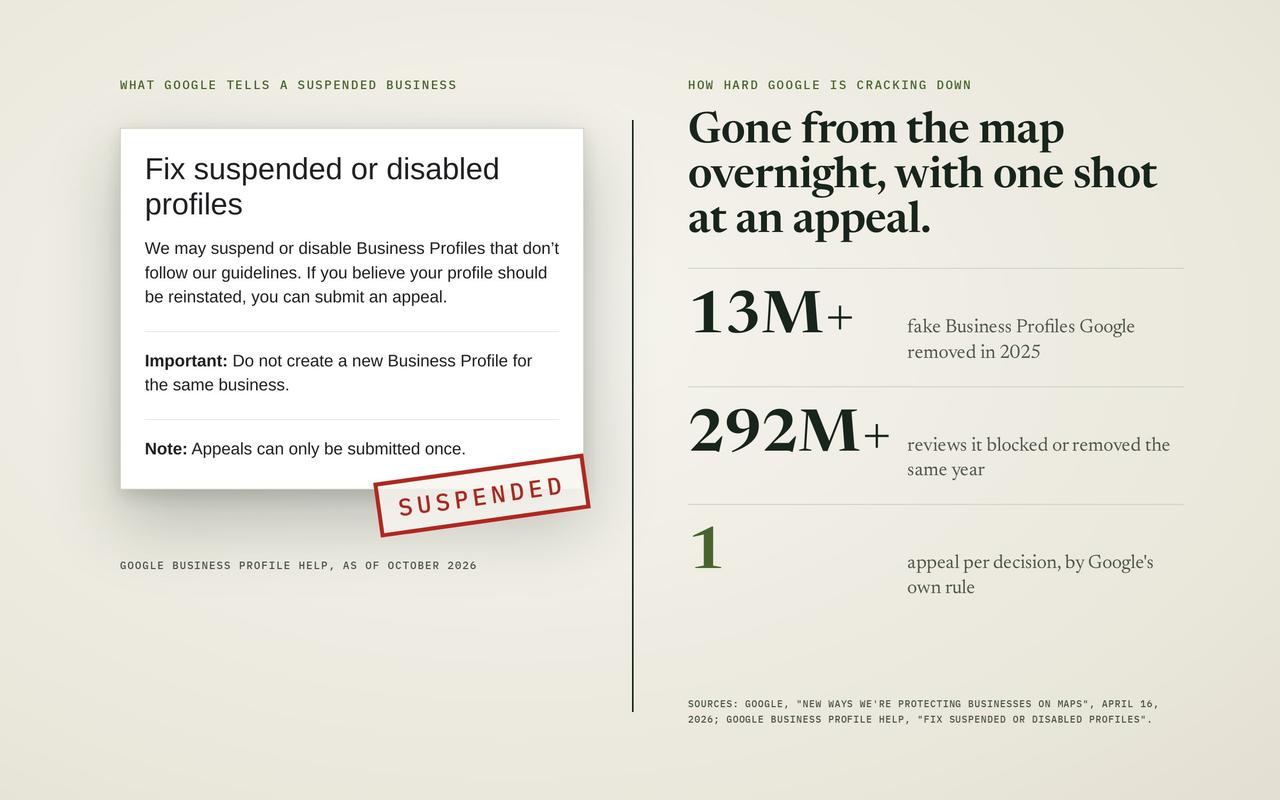
The second is the filter, and it is far more common. Google runs every review against its rules, mostly by machine, and it removes a staggering number. The company says it blocked or removed more than 292 million policy-violating reviews in 2025, up from 240 million the year before. It published more than 1 billion in the same year. When a review comes down after it has gone up, that is when an owner notices. These are the reviews Google says it will not restore.
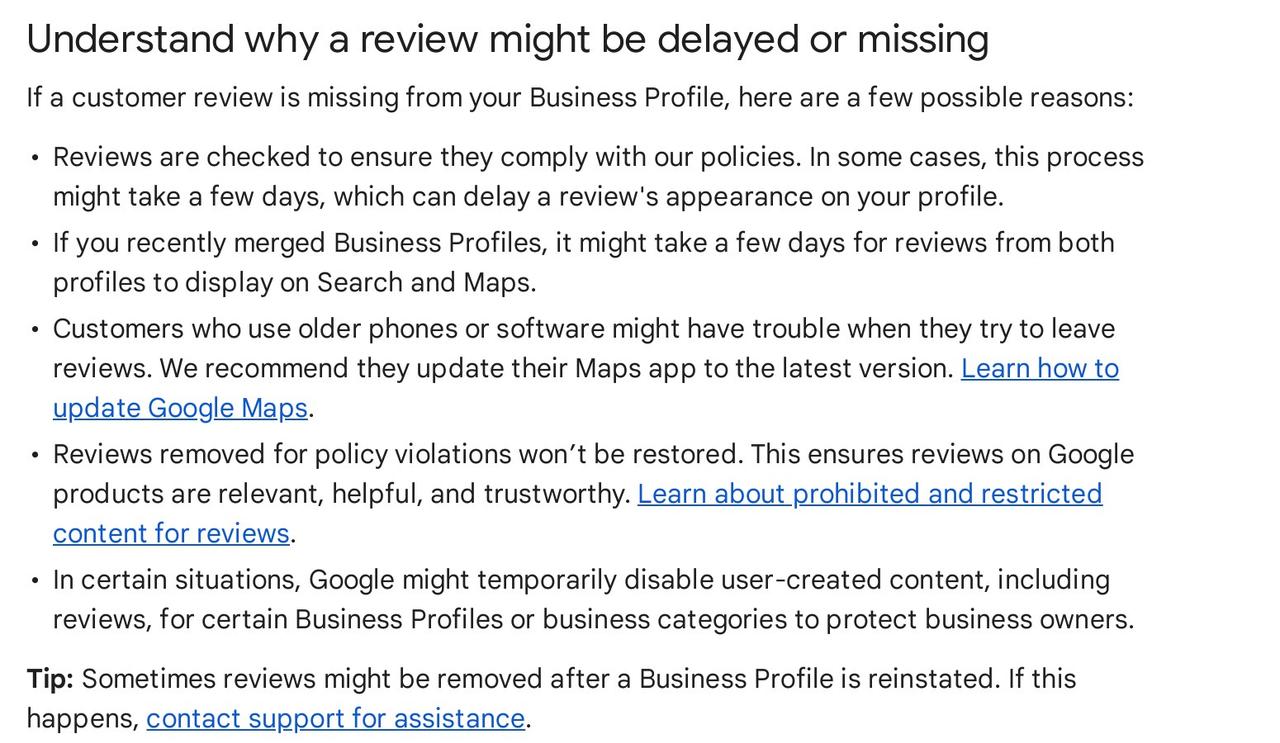
The third is a change to the profile itself. Google's help page on missing reviews lists several. After two Business Profiles are merged, reviews from both can take a few days to appear. Reviews can be removed after a profile has been suspended and then reinstated, and Google tells owners to contact support if that happens. Google may also switch reviews off for some profiles or whole categories of business; it has removed them entirely from schools for students aged 6 to 18. And a new review can sit in a queue for a few days while it is checked, so a customer who says "I left you a review" may simply be early.
What the filter is looking for
Google does not publish how its filter works, and nobody outside the company can see inside it. But its content policy for Maps says plainly what the filter is meant to catch, and several of the rules surprise owners who think of themselves as honest.
Some are obvious. Reviews must reflect a real experience. They cannot be paid for, "directly or in kind." They cannot come from a "conflict of interest," which Google says includes current or former employees and family. A business may not offer "payment, discounts, free goods and/or services" in exchange for a review, and may not "selectively solicit positive reviews from customers," a practice our story on the bad review you cannot remove explains in more detail.
The less obvious rules are about how a business asks. Google says merchants "should not require or pressure users to leave ratings or write reviews while on the premises, nor should they request that specific content be included." It gives two examples. A business may not ask its staff to collect "a certain number of reviews." And it may not ask staff to collect reviews "that include specific content, including content that identifies a staff member."
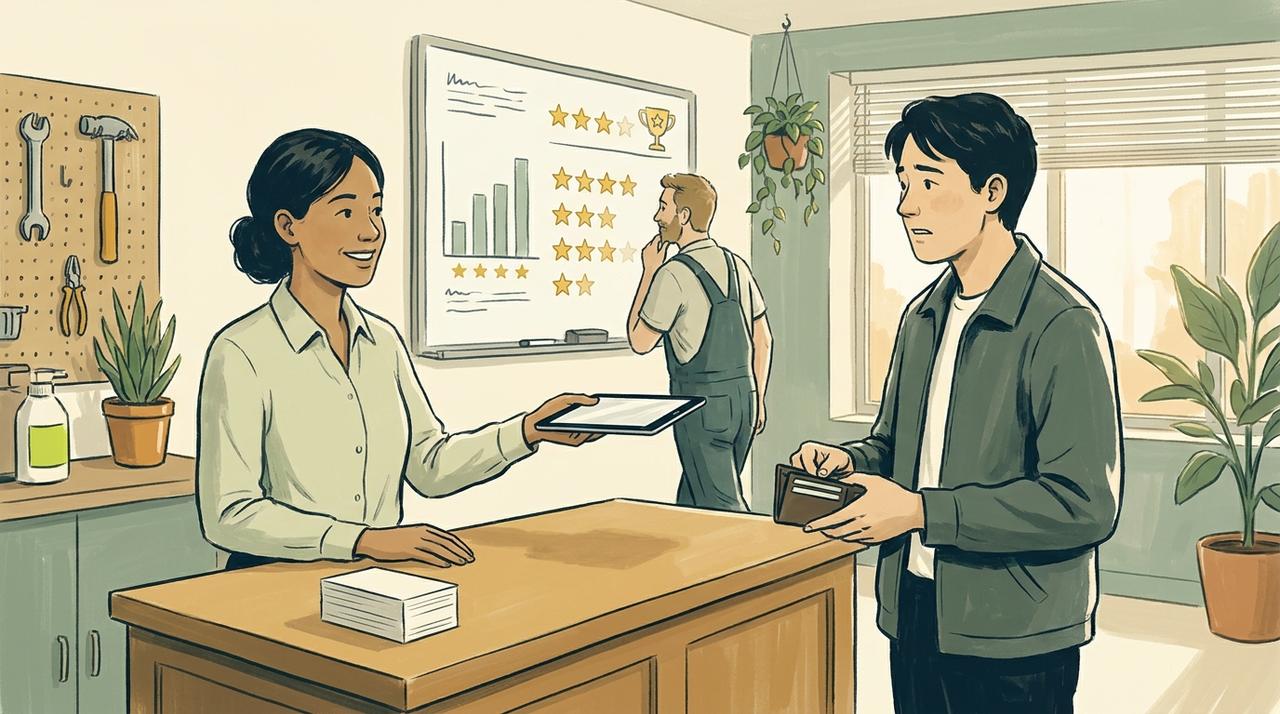
Read those lines again and picture a busy week at a typical service business. A tablet at the front desk, handed to customers at checkout. A monthly review target on the whiteboard, with a prize for the technician who hits it. A card that says "Loved your visit? Mention Sarah by name!" Each is common. Each is, by Google's own wording, against the rules.
Then there is the line that worries owners most. The policy targets "unusual volumes or patterns of review contributions that are indicative of efforts to manipulate a place's rating." It does not say what counts as unusual. When reviews began vanishing in large numbers in February 2026, Search Engine Roundtable collected the complaints. "We ran 200+ jobs in the past 15 days and ask for reviews on all of them," one owner, Rob Brooks, wrote. He had gone from about 994 reviews to 974. Another owner wrote: "We received 260 reviews last week, yet 100 of them were removed today." One restaurant location lost 76 reviews spread across four years and every star rating.
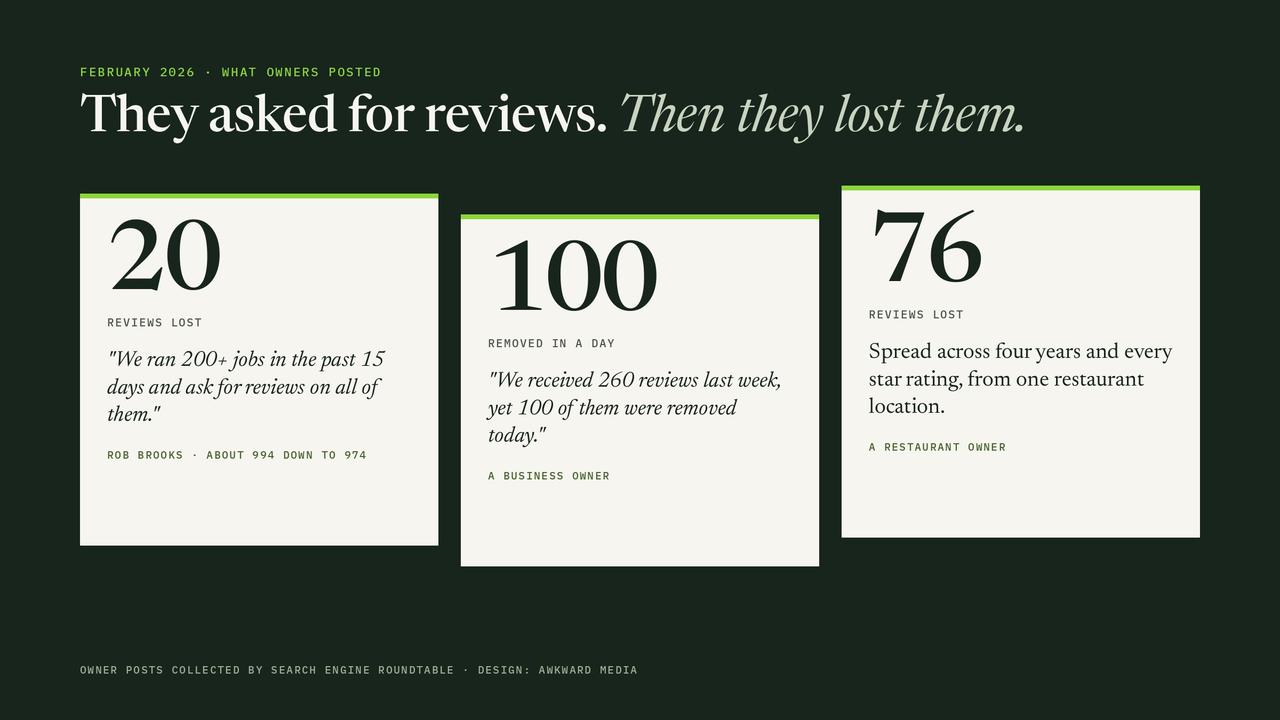
We cannot say why any one of those reviews was removed, and Google did not say either. But the pattern is consistent with what the policy describes. A filter built to spot bursts, scripts and pressure will sometimes catch a business that simply asked a lot of people at once, in the same words, at the same moment.
Why one lost review costs more than it used to
To see what a business is up against, we looked at who Google put on the map. On October 12, 2026, we searched from a phone for plumbers, dentists, roofers and personal injury lawyers "near me" in Houston, Phoenix and Toronto, and recorded every business in the map results: 38 of them across 12 searches.
Every one was rated 4.7 stars or higher. Sixteen had a perfect 5.0. Not a single business on any of those maps sat at 4.6 or below.
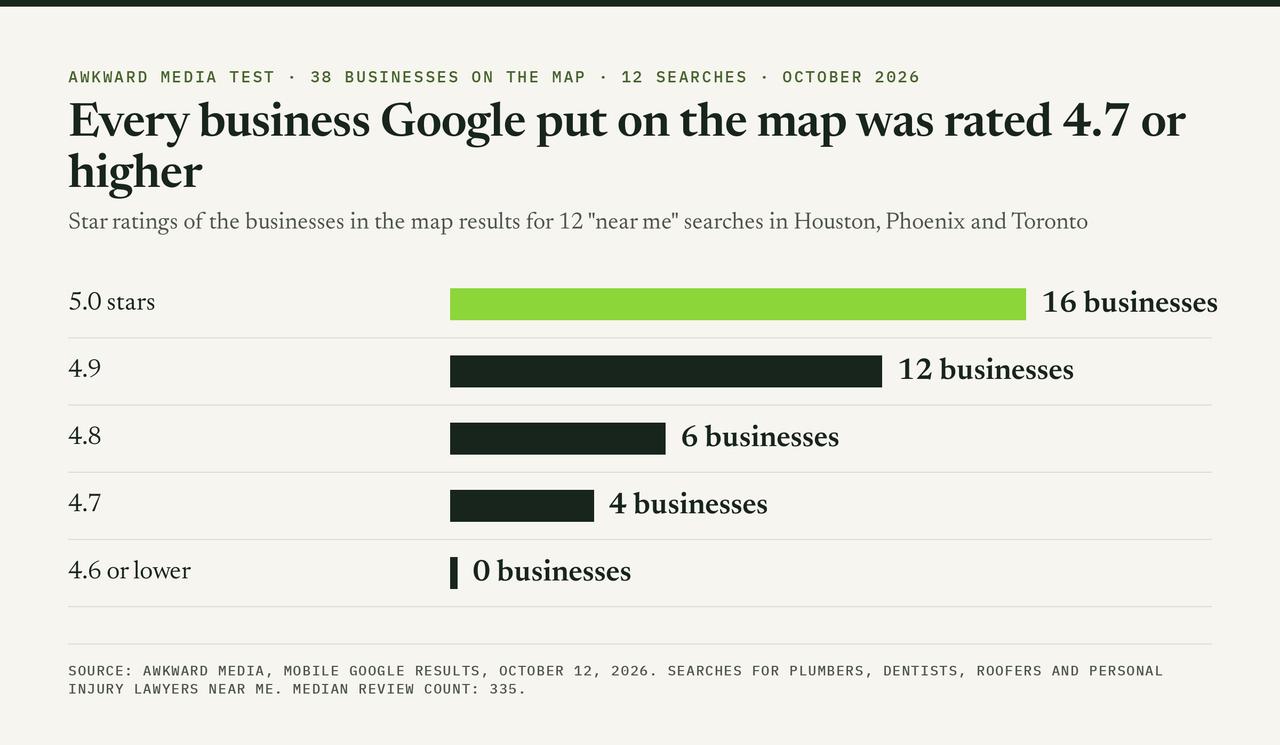
The review counts told a different story. The median business had 335 reviews, but nine of the 38 had fewer than 100, and one Toronto roofer made the map with 18. Google says it ranks local results on relevance, distance and prominence, and reviews are only part of prominence. The work of local SEO is getting all of those right at once.
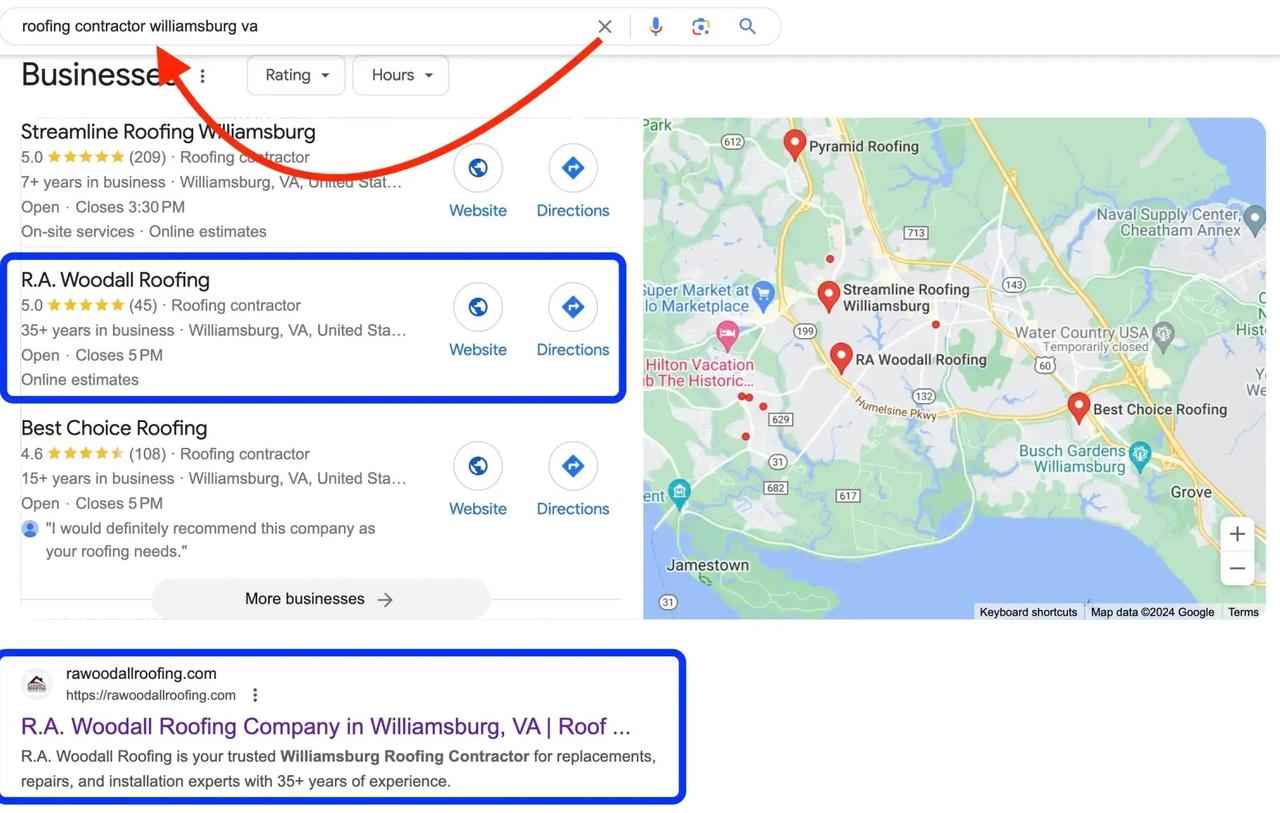
That matches what we see with clients. In one of our client reports for "roofing contractor williamsburg va," R.A. Woodall Roofing appeared on the map with 45 reviews and a 5.0 rating, above a competitor with 108 reviews and a 4.6. Its website was the first ordinary result below the map. The lesson is not that reviews do not matter. It is that a business needs enough real reviews, a high enough rating and a steady stream of new ones, and that each lost five-star review pulls a rating toward the line where Google stops showing it.
What to do when your reviews vanish
- Check that they are really gone. Look at your profile signed out of Google, or on another phone. Some bugs only affect what the owner sees.
- Give new reviews a few days. Google says its checks can delay a review. A missing review from yesterday may be in the queue.
- Find out whether it is just you. If owners across Google's help forums are reporting the same thing in the same week, it is probably a bug, and Google restored the reviews in July 2026.
- Think about what changed. A merge, a move, a new owner or a reinstatement after suspension can all affect reviews. If your business moved or changed hands and you ended up with a new profile, Google lets you transfer reviews from the old one, a common issue for brands with several branches that our multi-location SEO team handles often.
- Contact Google support with the details. Say how many reviews are missing, roughly when they went, and whether new ones are still appearing. Screenshots help.
- Do not ask everyone to post again at once. A sudden wave of reviews is exactly the kind of pattern the filter is watching for.
- Accept the ones Google calls violations, and change the habit. Google says those will not come back. The useful question is what in your process looked suspicious, so it does not happen again.
How to get more reviews that stick
Google's own tips for getting more reviews are short, and they line up with the rules. Its first is "Remind customers to leave reviews," by sending them a Google link or a QR code. Its last is "Value all reviews," because "a mix of positive and negative feedback often feels more trustworthy." Put the tips and the rules together and a method emerges.
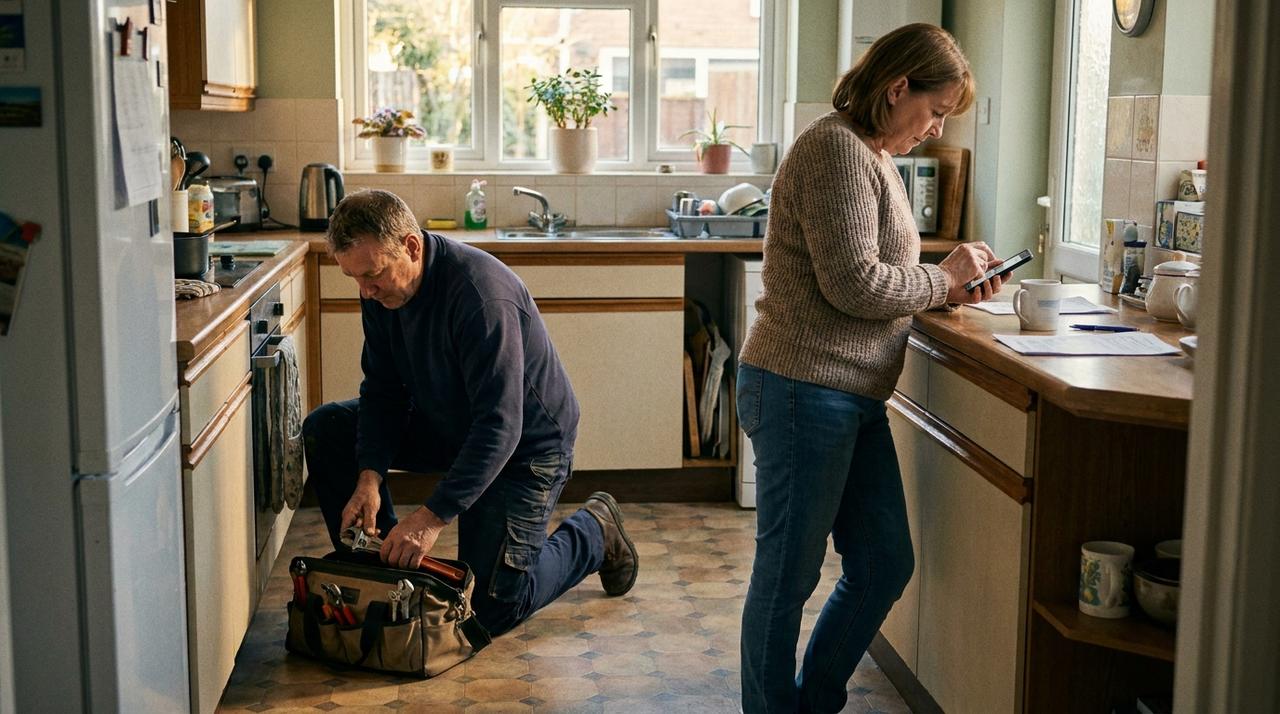
Ask every customer, the same way. Make the request part of finishing every job, for the customers who loved you and the ones who were merely satisfied. A business that asks everyone cannot be accused of asking selectively, and a review request tied to each finished job arrives at the pace the business actually works.
Ask, then let them go. Send the link by text or email after the visit, or hand over a card with the QR code. The customer can write at home, on their own phone, in their own time. That is the opposite of a tablet at the till.
Do not write the review for them. No suggested wording, no keywords, no request to name a technician. If a customer mentions someone by name on their own, that is their choice. Asking them to is against the rules.
Drop the quotas and the prizes. Staff targets for reviews are named in Google's policy. Discounts, gifts and draws for reviewers are banned outright, and in the United States, the Federal Trade Commission's 2024 rule makes paying for positive reviews a legal risk as well.
Reply, and make it count. Google advises owners to "be professional and polite," "keep it short and simple" and to write replies that add an update or answer a question, rather than repeating the same thank-you under every review. Replies are public. The next customer reads them.
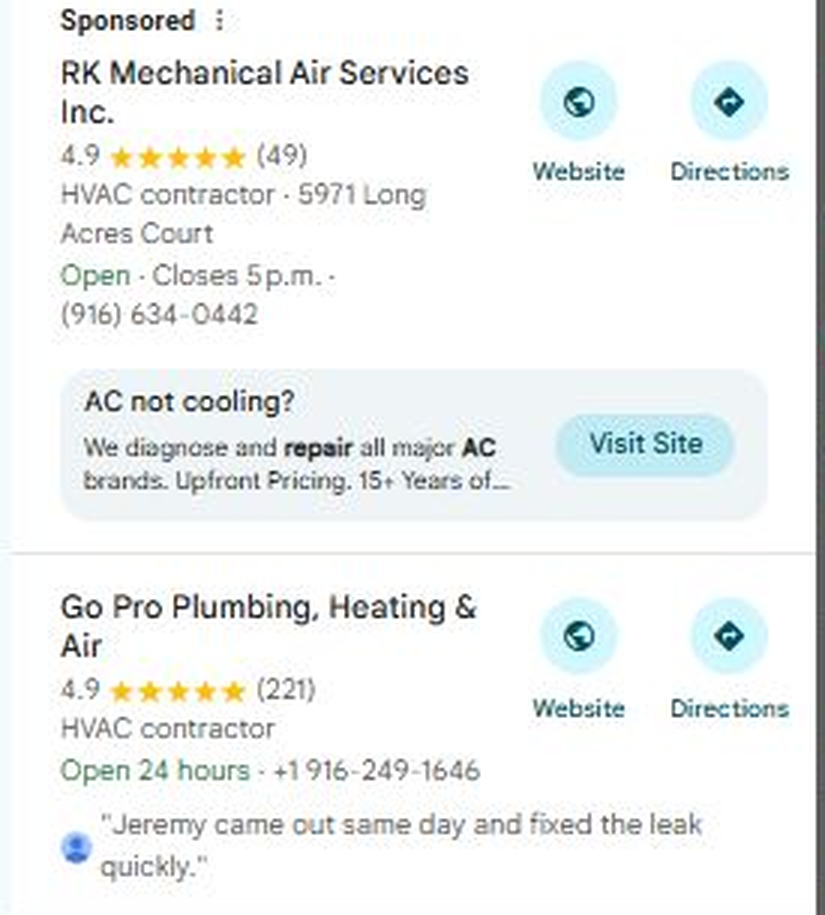
Businesses that work this way tend to build reviews that last. Go Pro Plumbing, Heating & Air in Sacramento has 221 reviews at 4.9 stars and is the first business below the paid ad on Google Maps for "HVAC repair." American Hurricane Shutters in Wilmington, North Carolina, has 62 reviews at 4.7 and ranks first on the map for "storm shutters near me" when searched from 52 miles away. Neither got there on reviews alone. Both got there with reviews that stayed put.
It matters in every trade where customers compare before they call, from roofers and heating and cooling companies to dentists and law firms. And it matters beyond the map: Google's AI answers now read the same profiles, as we found when we looked at how AI Overviews pick businesses.
If you are not sure whether your own review habits would pass Google's test, a proper SEO audit looks at your profile, your reviews and how you ask for them. Our free Google Visibility Check is a quicker place to start, and our Map Pack expansion work is how we help businesses climb into the top three across every town they serve. Or simply talk to us.
The owner with 4,651 reviews got them back because Google had made a mistake. Most of the time, Google has not. The reviews that survive are the ones that look exactly like what they are: real customers, asked politely, writing in their own words, a few at a time. That is slower than a review drive. It is also the only kind of review Google has no reason to take away.
Every fact in this story is linked to its source. Spot something out of date? Tell the editor and we will correct it.
Questions readers ask
Frequently asked questions
Why did my Google reviews disappear?
Usually because Google's filter decided they broke its rules, for example because they looked paid for, came from staff or family, or arrived in an unusual burst. Sometimes it is a Google bug, as in July 2026, or a change to your profile such as a merge or a reinstatement after suspension.
Will Google restore deleted reviews?
Only some. Google says reviews removed for policy violations won't be restored. Reviews hidden by a bug usually return once Google fixes it, and reviews held for checking can take a few days to appear.
How do I report missing Google reviews?
Contact Google Business Profile support. Say how many reviews are missing, roughly when they disappeared, and whether new reviews are still appearing, and include screenshots if you have them. If your profile was recently reinstated, Google specifically tells you to contact support.
Can asking for reviews get them removed?
It can if the way you ask breaks Google's rules. Google bans offering rewards, asking only happy customers, pressuring customers to review while on your premises, giving staff review quotas and asking for reviews with specific content. Asking every customer, without conditions, is allowed.
Can I ask customers to mention an employee in their review?
No. Google's policy says merchants may not ask staff to collect reviews that include specific content, including content that identifies a staff member. A customer who names someone on their own is fine.
How do I get more Google reviews?
Ask every customer after the job, by sending your Google review link or a QR code, and let them write in their own time and words. Reply to the reviews you get. Google says a mix of positive and negative feedback often feels more trustworthy.
About the author