Awkward Media

SEO content writing services · Canada and the USA

SEO content writing services that rank.

No page, no ranking. Every search you don’t have a page for sends the customer to whoever does. We write the service pages, town pages and answers your customers are searching for, each one built to win its search on Google, Google Maps and AI answers. Then we put it live.

GuaranteePage one in 60 days, or we work free.

30 minutes on Google Meet. For businesses doing $20k a month or more.

From a client · Pro-Tatch, fuel tank trailers

Google search box: Portable Fuel Tank Trailer
First result: Hotwood’s, protatch.com
Its page title with the number 1 beside it: Small Fuel Tank Trailers
The search “portable fuel tank trailer”, then the first result: protatch.com, shown under its store name, Hotwood’s. Captured October 2026.

As seen in and rated on

USA Today LA Weekly Clutch TopSEO UpCity

Client results

What results have our clients seen?

A pool enclosure company, a dental clinic and a nonprofit lender. Each card is cut from Google’s own results page: the search, the business, and the 1 marking where it ranks.

Covers in Play · pool enclosures

Google search box: Swimming Pool Enclosure in Trenton
Result: Covers in Play, coversinplay.com
Its page title with the number 1 beside it: Retractable Pool Enclosures
First website result for “swimming pool enclosure in Trenton”. What to look at: the 1 beside Covers in Play’s page title. Captured October 2026.

Pathways Dental Clinic · dentist, Calgary

Google search box: Same Day Emergency Dentist in NE Calgary
Result: Pathways Dental Clinic
Its page title with the number 1 beside it
Top unpaid website result for “same day emergency dentist in NE Calgary”. What to look at: the 1 beside its page title. Captured October 2026.

B Generous · nonprofit lending

Google search box: Bridge Loans for NonProfits
Result: B Generous
Its page title with the number 1 beside it: Bridge Loans for Nonprofits
First website result for “bridge loans for nonprofits”. What to look at: the 1 beside B Generous’s page title. Captured September 2026.
See more client results

What we write

What is SEO content writing?

SEO content means the words on your website, written so the right page shows up when a customer searches. Here’s what that looks like for a roofing company: every search a buyer types gets a page that answers it.

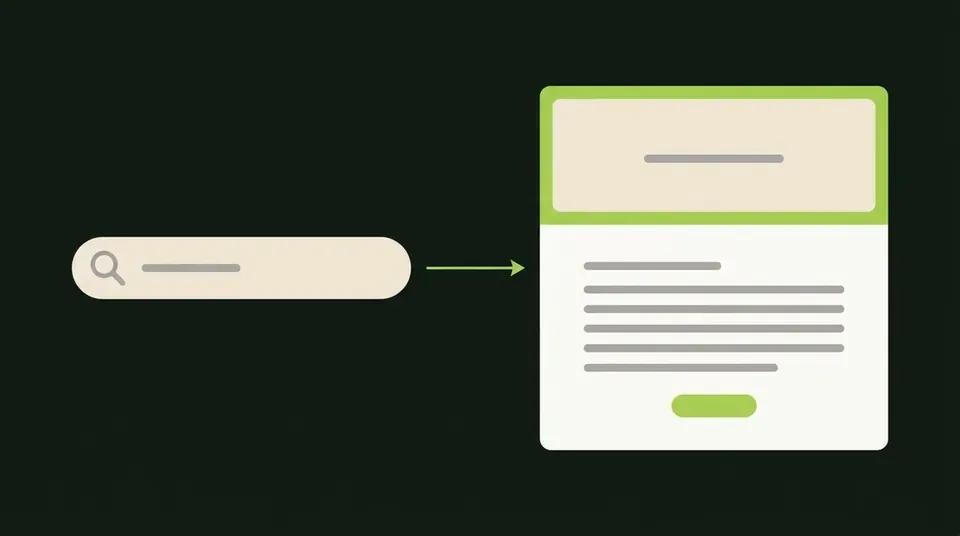
Illustration: a search leading to a page whose top answers it, with a button below
roof repair burlington|

Service page

Roof Repair in Burlington

What it costs, how fast you can come out, how to book.

roofer oakville

Town page

Roofing in Oakville

The jobs you’ve done there and the neighbourhoods you cover.

how much does a new roof cost

Answer page

What a New Roof Costs, Explained

Your real price ranges, what changes them, and a link to book a quote.

is a leaking roof an emergency

The first two lines

A straight answer, up top

The part Google’s AI answer and ChatGPT tend to quote.

An illustration with a made-up roofing company.

Who writes it

What does an SEO content writer do?

They write the pages that answer what your customers type into Google, in the words your customers use. Spelling and style are the easy part. The real work is knowing which page to write, what it has to answer, and how it fits with the rest of your website.

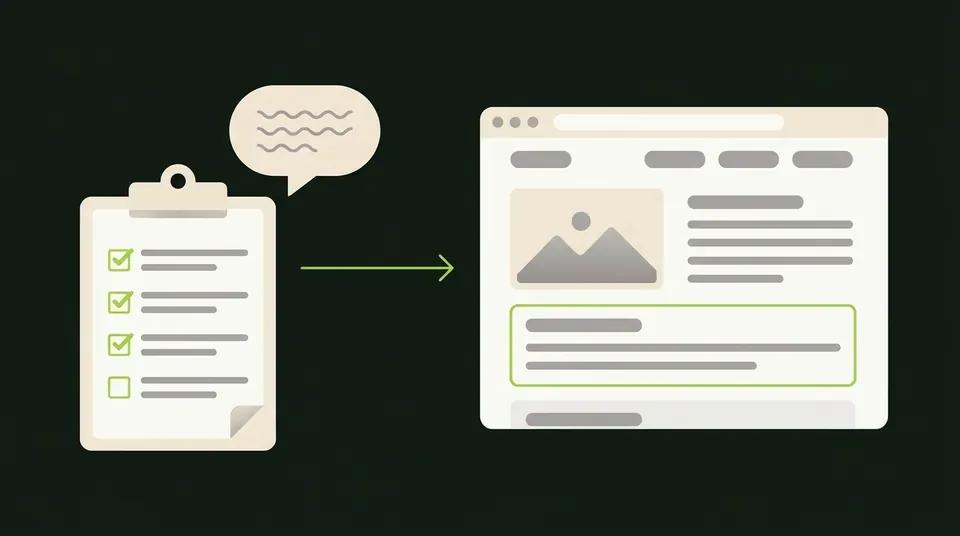
Illustration: an owner's answered questionnaire and spoken notes turned into a finished web page

01

Finds the searches

Looks up what buyers type, with your towns and services in them, and decides which ones deserve a page of their own.

02

Reads what already ranks

Opens the pages Google shows today for that search and notes what they answer and what they leave out.

03

Asks you what only you know

Your prices, timings, towns and the questions customers ask. Nobody outside your business can make those up.

04

Writes, links and publishes

Writes the page, links it to the pages around it, writes the title Google shows, and puts it live on your site.

Is SEO content writing different from copywriting?

Copywriting is writing to persuade: an ad, a sales page, an email. SEO content writing has to persuade and also be found. It starts from a search someone is already typing, answers it better than the pages on Google’s first page today, then asks for the booking. A page that persuades but never gets found persuades nobody.

Is paying for SEO content worth it?

A page that ranks keeps getting found without you paying for each visit, the way you pay for every ad click. That’s why it’s worth paying for when there’s a search with real buyers behind it. If nobody types the search, no page will change that, and the page shouldn’t be written. See what it costs further down.

Freelancer, agency or doing it yourself?

Each one works for a different business. What changes is who decides which pages to write, and who puts them on your site.

Doing it yourself

Costs your time, not money. It works if you can write one good page a week and keep going. The free checks further down this page show where to start.

A freelance writer

Good for words on a page. You still decide which pages to write, check the facts and put each page on your website.

An SEO agency

Picks the searches, writes, publishes, links the pages together and fixes what slows the site, then watches where each page ranks. You answer questions and approve pages.

Illustration: a megaphone on one side, and a signpost pointing to a shop door on the other

Writing it with ChatGPT

Can ChatGPT write my website content?

It can write a draft in under a minute. Whether that draft brings in customers depends on what goes into it. Customers pick the page that shows things only that business has, and ChatGPT has never seen your jobs, your prices or your customers.

What does ChatGPT do well on a business website?

The parts that don’t need to know you. Used like a fast assistant, it saves hours:

  • A first outline for a page
  • A list of questions people often ask about your trade
  • Tidier wording for a sentence you already wrote
  • A shorter version of a long paragraph

What can’t ChatGPT know about your business?

The things a customer uses to pick you. You have to hand them over:

  • Your real prices or price ranges
  • The towns and areas you actually cover
  • Photos of jobs you did
  • Reviews and results a stranger can check
  • The questions your customers asked you this month

Leave these out and the page reads like every other page on the same search. Google’s own guidance asks whether a page shows first-hand experience and original information, and these are exactly that.

How can I use ChatGPT on my own pages without hurting them?

Six steps, in this order, for one page at a time:

  1. 01Write your facts down first: the price range, the towns, how long the job takes and what’s included.
  2. 02Paste those facts in and ask for a draft for one service in one town.
  3. 03Check every number and claim it added. Delete anything you can’t back up.
  4. 04Add one photo of a real job and one real review.
  5. 05Ask one question: could a rival paste this onto their own site unchanged? If yes, add a line only you could write.
  6. 06Make each town page different, not the same draft with the name swapped. Our section on city pages shows what goes on each one.

Rather not do it yourself? We write every page from your facts, check every number and claim, and make each town page its own. You approve each page before it goes up.

Book my free strategy call

Which pages

Blog posts, service pages or city pages: which does my business need?

Each kind of page wins a different kind of search. A business that only has a blog is missing the searches where people are ready to hire.

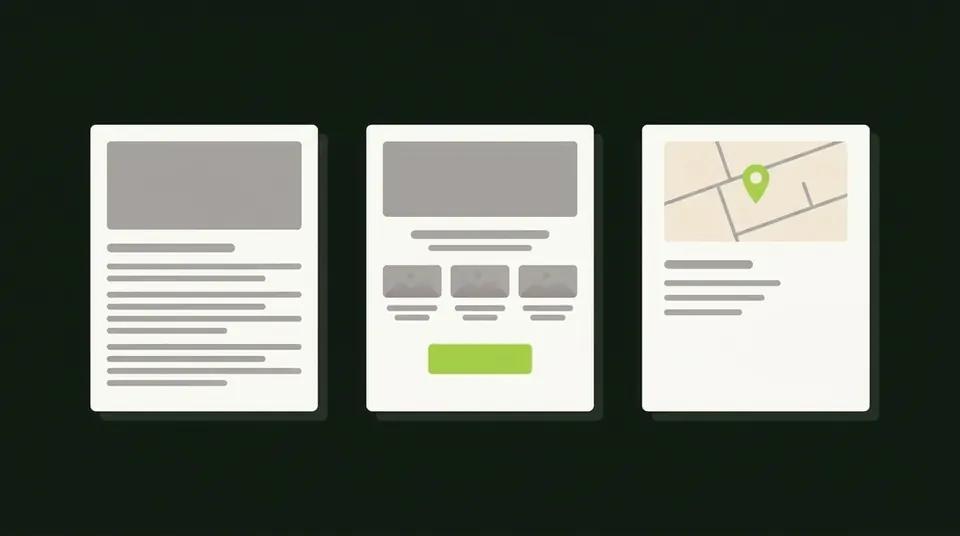
Illustration: an article page, a service page with a button and a town page with a map pin, side by side

Page

Example search

The searcher is

What wins it

Service page

“roof repair”

Ready to hire

What you do, what it costs, how to book.

City page

“roofer in oakville”

Ready to hire, nearby

Jobs you’ve done there, the areas you cover.

Answer page

“how much does a new roof cost”

Comparing

A straight answer up top, then your real price ranges.

Blog article

“signs your roof needs replacing”

Researching

Teaches, then points to the service page.

Case study

“roofer reviews oakville”

Checking you out

A real job, start to finish, with photos.

Example searches for a made-up roofing company.

Does a business blog help SEO?

Yes, when each post answers a question your customers really type and links to the service it’s about. A blog of company news and seasonal tips rarely ranks for anything a buyer searches.

Which pages should we write first?

The service pages, because those searches are closest to a sale. Then a page for each town you want work from, then answers to the questions people ask before they buy.
Book my free strategy call

How we write it

How do we write SEO content?

No pile of drafts for you to deal with. We pick the searches, write the pages, put them on your site and show you where each one ranks.

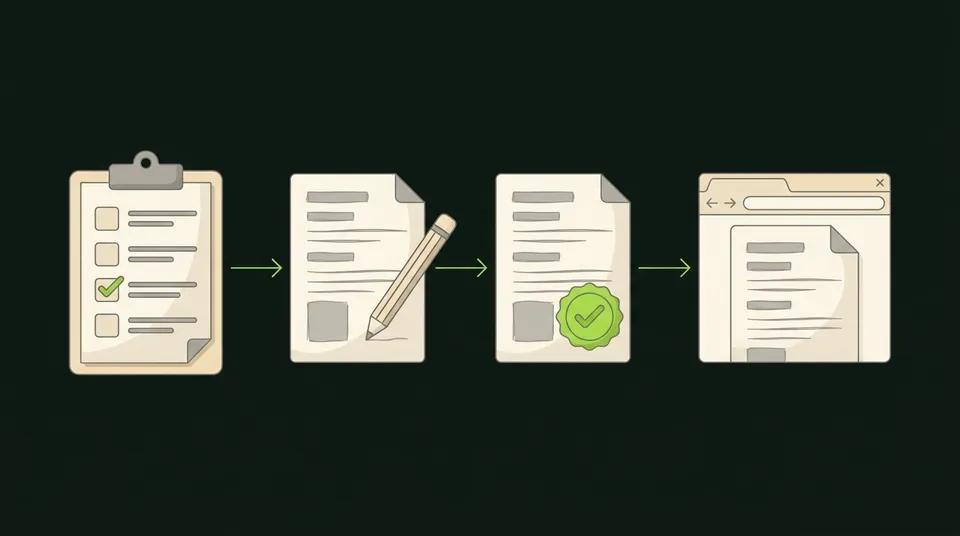
Illustration: a filled-in questionnaire becomes a draft page, the draft is checked, and the page goes live on a website
01

Pick the searches worth winning

We look up what your best customers type, with your towns in them, and give each search its own page. Two pages chasing one search split your chances. One page per search wins it.

02

Start with your answers

Before we write a word, we collect what only you know: the questions customers ask on the phone, your prices or price ranges, the towns you cover and the jobs you’re proud of. That’s what makes a page sound like you.

03

Write each page to win one search

A headline in the customer’s words. The answer in the first two lines. Then what a buyer needs before they book: price, timing, area, proof and how to book.

04

Put it on your site

We publish it. If someone else manages your website, they get finished pages and a plain list of where each one goes. Copy and paste.

05

Link every page to the next one

An answer page leads to the service it’s about. A service page leads to the towns you cover. Customers find their way to booking, and Google sees how your pages fit together.

06

Check, then sharpen

We watch where each page ranks and the searches it shows up for, then decide which pages to add or improve next.

Your best page starts with what customers ask you.

The questions people ask you before they book are the same questions they type into Google. Give each one a straight answer on your site, and you show up when they ask. Content is one part of every plan, next to website fixes and links from real sites, with AI answers included.

From you

What do we need from you to start?

Less than you’d think, and none of it is writing. Here’s the list, in the order it helps the pages.

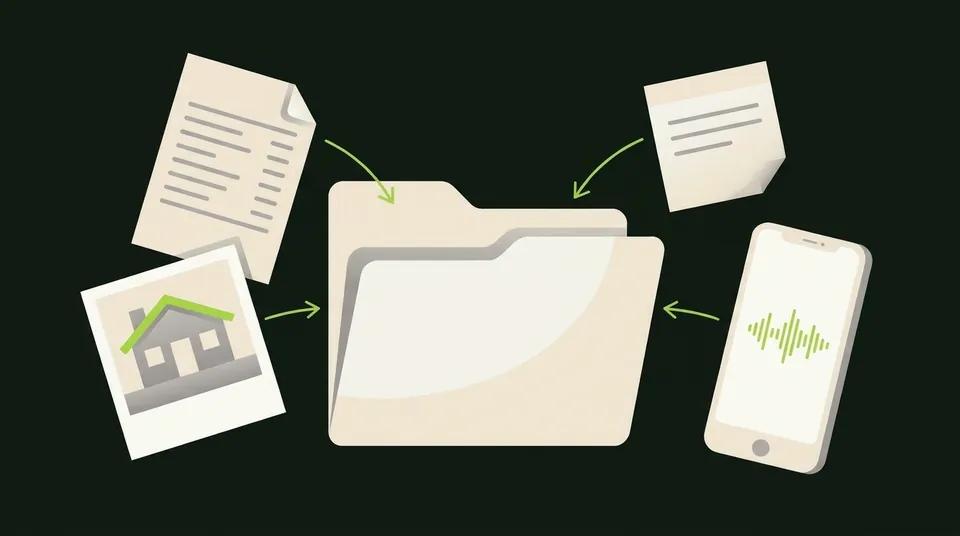
Illustration: a price list, a photo of a finished job, a voice note and a sticky note going into one folder

01

Your prices or price ranges

Even rough ones. A range on the page beats “call for a quote”, for the reader and for Google.

02

The towns you cover

Where you work today, where you want more work, and where you’d rather not drive.

03

The questions customers ask

Jot down what people ask you on the phone for a week. Each question can become a section or a page of its own.

04

Photos of real jobs

Phone photos are fine: before and after, your team, your vans.

05

Your best jobs

Two or three jobs you’re proud of, and what made them hard. That’s the first-hand experience Google looks for.

06

Access to your website

Your website login and Google Search Console, the free Google tool that shows which searches find you. If someone else runs your site, we work through them.

How much of my time does it take?

One conversation at the start to answer questions, then a read of each page before it goes up. A voice note is fine if you’d rather talk than type.

What if I don’t have photos or prices to hand?

Start without them. The page gets written with what you have, and you’re told which photo or number would help it most, so you can add it later.

Illustration: a laptop showing a website, a key in front of it and an open padlock
Book my free strategy call

Picking the searches

How do you choose which searches to write for?

Not by how many people search. By what the person searching wants to do next. A small search typed by someone ready to hire beats a big one typed by someone just curious.

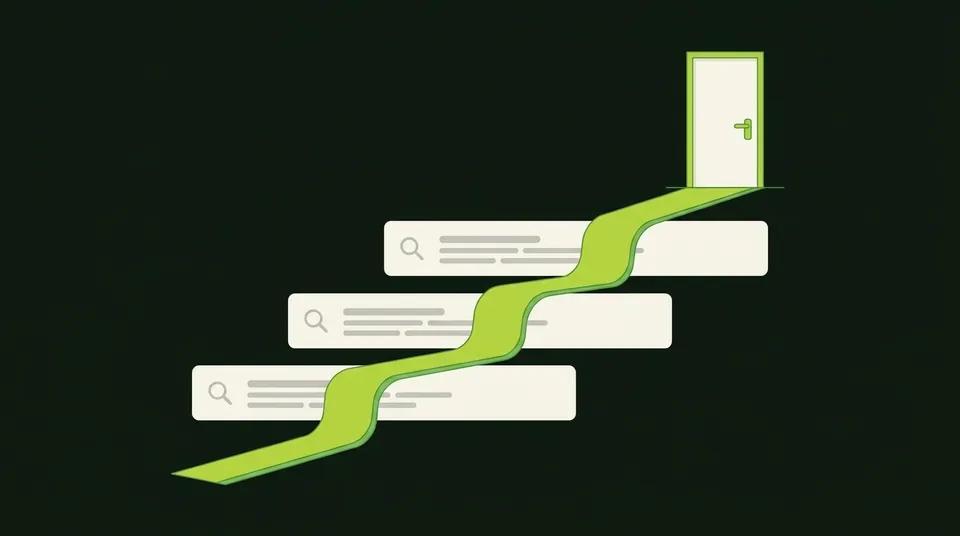
Illustration of the four stages of a search: a path climbing three search bars, from just learning to comparing to ready now, and ending at the business’s front door

Example searches for a made-up plumbing company.

What is keyword research in plain words?

Finding the exact words your customers type into Google, how often they type them, and who shows up first today. It tells us which pages to write and what each one has to beat.

Can one page rank for many searches?

Yes, for searches that mean the same thing, like “roof repair” and “roof repairs near me”. Searches that want different things get their own pages, or the pages compete with each other.
Illustration: a web page with speech bubbles rising from it, the questions customers ask

How deep

How much should one page cover?

Enough to answer its search completely, and no more. One page that tries to cover everything you do rarely wins any single search. A set of pages, each on one job and linked together, shows Google you know the whole subject.

Illustration: one main page joined to pages on questions, prices, timing, places, repairs and reviews

One subject, one set of pages

Main page

Roof repair in Burlington

  • What roof repair costsAnswer page
  • Emergency leak repairService page
  • Repair or replace: how to tellAnswer page
  • Storm damage and insuranceAnswer page
  • Flat roof repairService page
  • Roof repair in OakvilleTown page

An example for a made-up roofing company. Each smaller page links back to the main one.

What is a topic cluster in plain words?

It’s a main page about one service, plus a few smaller pages that each answer one question about it, all linked to each other. Think of a hardware store: one aisle per job, with signs that walk you to the right shelf. Google reads those signs the same way a shopper does.

How do I know a page is deep enough?

Search the words you want it to win. Read the first five pages Google shows. If yours answers every question they answer, adds the ones they skip (your prices, your towns, your real jobs) and does it in plain words, it’s deep enough.

Can a page be too long?

Yes, when the length is padding. Readers skip it and Google learns nothing new from it. A long page is fine when every section answers something a buyer asks.

Book my free strategy call

Same topic, rewritten

What does SEO-friendly content look like?

Here’s one page as it shows in Google, before and after we write it. Which one would you click?

Illustration: one service page with a heading, text, a photo and a button, its heading under a magnifying glass

Before

ridgelineroofing.ca › blog

Some Roof Tips | Ridgeline Blog

Spring is a great time to think about your roof. Here are some things every homeowner should know…

  • ×Answers a question nobody typed.
  • ×No service, no town, no price.
  • ×Doesn’t lead anywhere you can book.

After

ridgelineroofing.ca › new-roof-cost

What a New Roof Costs in Burlington | Ridgeline Roofing

Real price ranges for asphalt and metal roofs in Burlington, what changes the price, and how to book a free inspection.

  • ✓Matches the exact words people type.
  • ✓Gives the answer before the click.
  • ✓Leads straight to booking.

An illustration. Ridgeline Roofing is a made-up business.

Inside one page

What should a service page include?

Seven parts, top to bottom. Here they are on a page drawn as an example, then what each part does for the person reading it.

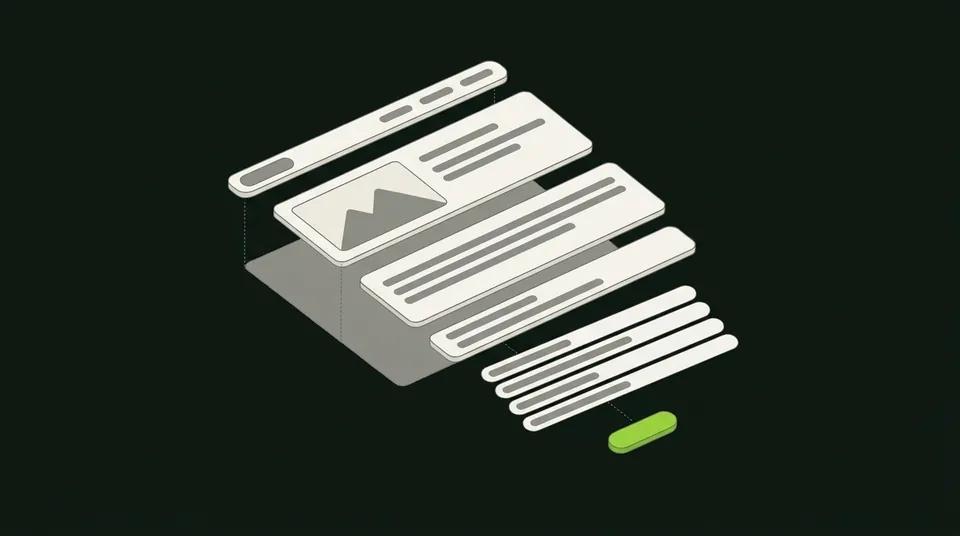
Illustration: one web page pulled apart into its layers: top bar, photo, text, a list of questions and a button
1Roof Repair in Burlington
2We fix leaks and storm damage across Burlington and Oakville. Repairs from $450.
3Photo of a finished job + a named review
4Price table: small, medium, large repairs
5Burlington · Oakville · Milton
6How soon can you come? Do you work in the rain?
7Book a free inspection

An illustration for a made-up roofing company.

  1. 1

    A headline in the customer’s words

    The words people type, with your town in them. “Roof repair in Burlington” beats “Quality you can trust”.

  2. 2

    The answer in two lines

    What you do, where, and roughly what it costs. Someone who reads only this knows whether you fit.

  3. 3

    Proof they can check

    A real job, a review with a name on it, a photo you took.

  4. 4

    Prices or price ranges

    Even a range. It answers the first question a buyer has, before they go looking for it on someone else’s page.

  5. 5

    The areas you cover

    Towns and neighbourhoods by name, each linked to its own page when it has one.

  6. 6

    Questions answered on the page

    The ones customers ask before they book, each with a short, straight answer.

  7. 7

    One clear next step

    One button, the same words every time it shows. A page with four different asks gets none of them.

Does every page need all seven?

Service and city pages do. An answer page or a blog article can drop the price table and the area list, but it still needs the answer up top and a link to the service it’s about. Our on-page SEO work checks these parts on the pages you already have.

Book my free strategy call

Before it goes up

What should every page be checked for before it goes live?

Ten checks a page should pass before anyone sees it. Open one of your own pages and tick them off as you read it.

of 10 checked. Any box left empty is the first thing to fix on that page.
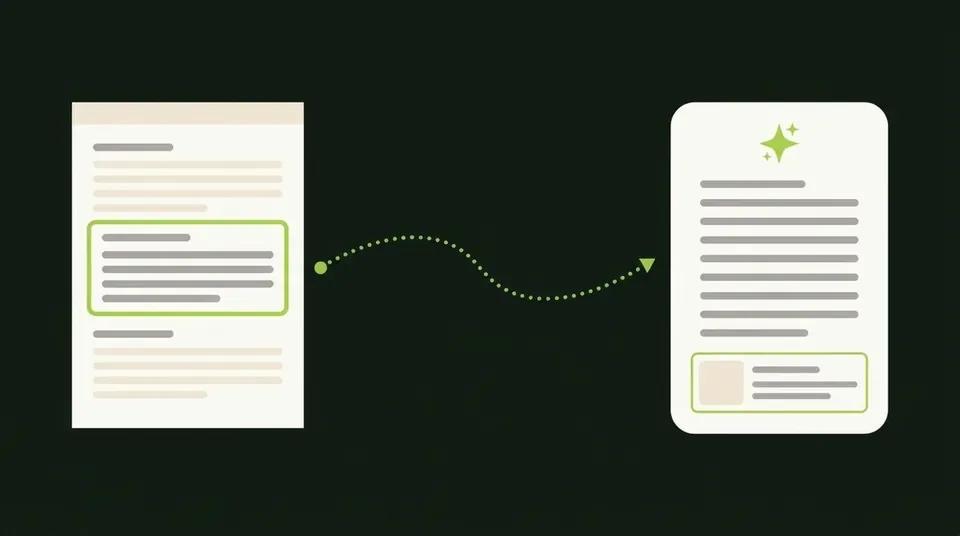
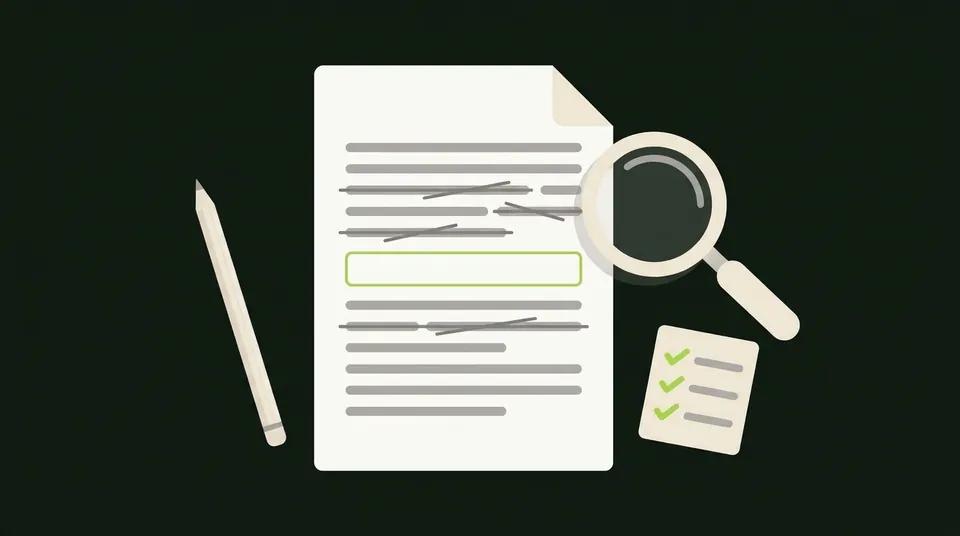
Illustration: a draft page with lines struck out and one rewritten, a pencil, a magnifying glass and a ticked checklist

Who should check the page?

Someone who knows the trade checks the facts: prices, timings, what’s safe to promise. Someone who doesn’t checks that it makes sense to a stranger. On our plans that’s you for the first and us for the second, and you can ask for changes before anything goes up.

What if a fact on the page goes out of date?

Prices and services change. Fix the page the same week. A page quoting last year’s price loses the trust of the first customer who reads it. Our section on updating old pages covers the rest.

City pages

How do you write city pages that aren’t copies of each other?

Swapping the town name on one page and publishing it twenty times is the fastest way to get none of them shown. Each town page needs things only that town has. Pathways Dental Clinic in our results above is the first website result for an emergency dentist search in its own part of Calgary, NE Calgary, not the city as a whole.

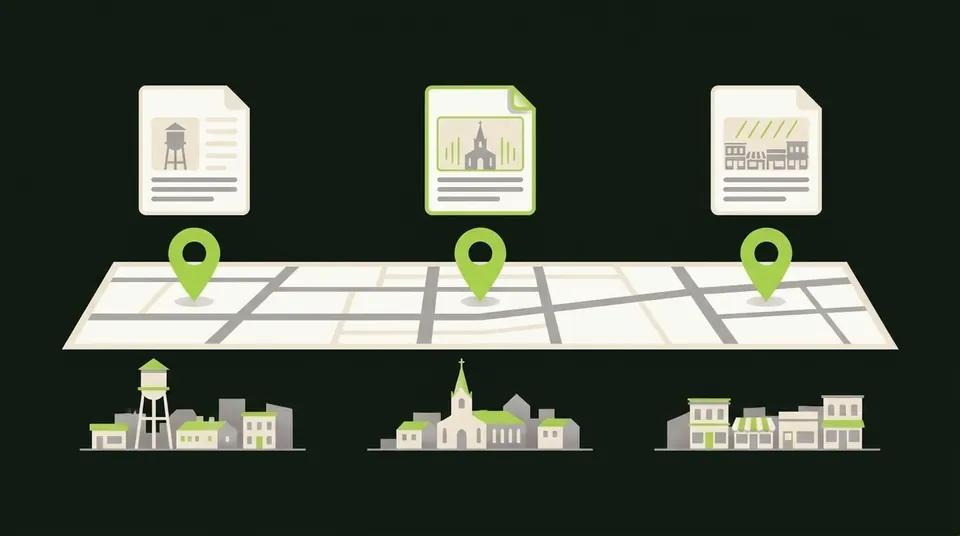
Illustration: a map with three town pins, each town with its own different page

Jobs done there

Real projects in that town, with a line on each and a photo where you have one.

Areas inside it

The neighbourhoods and streets you cover, named the way locals say them.

Local details

Local rules, permits or weather that change the job in that town.

Its own questions

What people in that town ask, answered on that page and no other.

How many city pages should a business have?

One for each town you want work from and can serve well. Ten strong pages beat fifty thin ones, and we start with the towns closest to you.

Do city pages help on Google Maps?

They help Google connect your business to those towns. The map itself runs on your Google Business Profile too, which is on our local SEO and map pack expansion pages.
Illustration: a phone map with three pins, one highlighted, and a dotted path from it to a shop
Book my free strategy call

AI answers

How do you write content that Google’s AI answers and ChatGPT quote?

AI answers lift short, plain passages from pages they trust. So we write every page so its key passages make sense on their own, with your business named in them. The same writing work now pays off on Google and in AI answers.

Illustration: one paragraph of a business's page carried into an AI answer, with the page shown as its source

An illustration of the order, not a screenshot.

Do AI answers need different content from Google?

Not different pages. The same page, written so each answer is clear on its own and backed by facts only you have: your prices, your towns, your jobs.

Where can I learn more about AI search?

Our free AI Search Guide, and the pages on AI SEO, AI Overview SEO and ChatGPT SEO.

Trust

What makes content trustworthy to Google?

Google says it looks for content written by people who know the subject first-hand. For a business, that’s the easiest part, because you’ve done the work.

Illustration: a page with a ribbon seal, a framed photo of a finished roof and a shield

01

Real experience

Jobs you’ve done, problems you’ve fixed, told the way you’d tell a customer.

02

Real numbers

Your price ranges and timings, not “contact us for a quote”.

03

Real photos

Your team, your vans, your finished jobs. Not stock.

04

A name behind it

Who wrote or checked the page, and why they know.

05

Proof

Reviews, licences and case studies, linked from the page.

What is E-E-A-T?

Google’s shorthand for experience, expertise, authority and trust: the signs that a page was written by someone who knows the subject. It isn’t one setting you switch on. It’s what the five things above add up to.

Can you write about my trade if you’re not in it?

We write from what you tell us: your answers, your prices, your jobs. That’s why we start every page with your answers, and why it ends up sounding like you.

By trade

Which industries do we write SEO content for?

The pages change with the trade, because the searches do. Here’s what we write first for each, and where to read more about SEO for that trade.

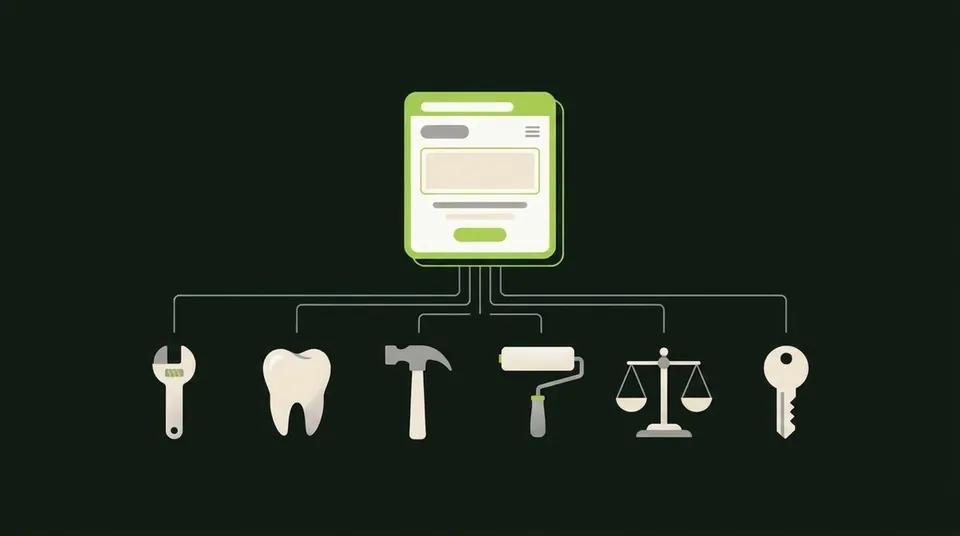
Illustration: one page linked to six trades: a wrench, a tooth, a hammer, a paint roller, scales of justice and a key

Plumbers

Emergency repairs, water heaters and drains, one page per job and per town.

Read more

Heating and air conditioning

Repair, install and tune-up pages, written for the season people search them.

Read more

Roofers

Repair, replacement and storm damage, with real price ranges.

Read more

Electricians

Panel upgrades, rewiring and car chargers, each on its own page.
Read more

Landscapers

Design, patios and lawn care, with photos of finished yards.

Read more

Builders and contractors

Project pages buyers compare before they ask for a quote.

Read more

Pest control

One page per pest, because people search the pest, not the company.

Read more

Cleaning companies

Home, office and move-out cleaning, each with what’s included.

Read more

Movers

Local, long-distance and packing pages, with the towns you move between.

Read more

Self storage

Unit sizes, prices and access hours, page by location.

Read more

Dentists

Treatment pages that answer cost and comfort questions plainly.

Read more

Chiropractors

Pages for each condition people search, from back pain to headaches.

Read more

Therapists

Careful, private-minded pages for each kind of therapy offered.

Read more

Med spas

Treatment pages with what to expect, recovery time and price ranges.

Read more

Plastic surgeons

Procedure pages that answer the questions people ask before a consult.

Read more

Law firms

Practice-area pages and answers to the questions clients ask first.

Read more

Mortgage brokers

Pages for each kind of mortgage and each kind of buyer.

Read more

Architects

Project pages and pages for the kinds of buildings you design.

Read more

Online stores

Category and product pages written to rank, not copied from the maker.

Read more

Companies that sell to companies

Pages for each problem your buyers search before they talk to sales.

Read more

Not on the list? See every industry we work in.

Illustration: a street of four small businesses side by side, one with a green awning
Book my free strategy call

Pages you already have

Should I update my old content or write new pages?

Both, in that order. A page Google already shows is easier to move than a new one. We look at what you have before we write anything new.

Illustration: a dusty old page refreshed into a bright page with a new section and a tick

Update

When: Shown on Google, but on page two or three.

Rewrite the top, add what the pages above it cover, fix the title.

Combine

When: Two pages chasing the same search.

One stronger page; the old address forwards to it.

Rewrite

When: Thin, out of date, or about something nobody searches.

Point it at a search people really type.

Write new

When: A search you sell to with no page for it.

A new page built to win that one search.

How often should website content be updated?

When something on it changes: your prices, your services, a Google feature you mention, or the pages ranking above it. A date changed with nothing else changed does nothing.

Will updating a page lose its ranking?

Not when the address stays the same and the page keeps answering the search it ranks for. We keep what works and add what the pages above it have.

Seeing it work

How do you know if SEO content is working?

Three readings, in this order. Where each page ranks for the search it was written for. How often Google shows the page. How often people click it.

Illustration: a search result moving up, an eye for being shown, and a pointer clicking, joined by arrows

What do clicks and impressions mean?

Total clicks is how many times someone clicked through to the site from Google. Total impressions is how many times the site was shown in results. Both come from Google Search Console, Google’s free report on your website, not from an agency’s own tool.


For a new page, rankings move first. Showings follow, then clicks.

Can I see where my pages rank?

You see the search each page was written for and where it sits on Google today. Ask us and you get the answer fast, in plain words.

What if a page doesn’t move?

We look at what the pages above it have that it doesn’t, then rewrite, add links to it from your other pages, or both.
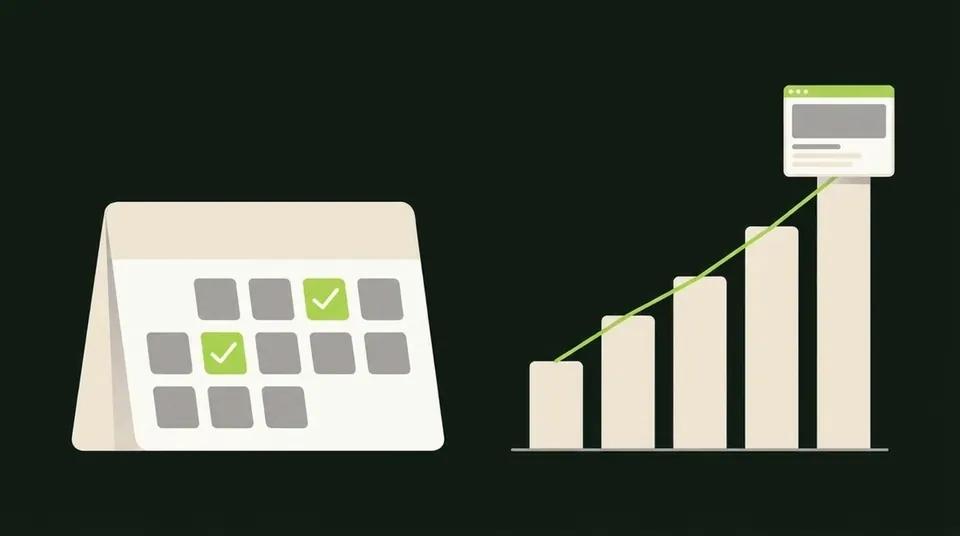
Illustration: a board with a rising line beside a desk calendar with ticked days

Prices

How much do SEO content writing services cost?

Our prices are on the website, and they’re the same across the US and Canada. Google Maps starts at $1,497 a month. Google rankings start at $2,697 a month. Both go up for multiple locations, multiple websites and complexity. AI answers come with every plan.

Illustration: two plan cards and a signed promise with a seal

Google rankings

$2,697+

a month. Higher for multiple locations, websites and complexity.

Pages written and put live, with the links and fixes that rank them.

Google Maps

$1,497+

a month. Higher for multiple locations, websites and complexity.

For businesses customers visit or call out.

AI answers

Included

AI answers come with every plan.

Google’s AI Overviews, AI Mode and ChatGPT.

Do you charge per word or per page?

Neither. Content is part of every plan, with the work that ranks it. You get your number on the strategy call, after we’ve looked at your site and your searches.

Can I buy content on its own?

Our plans cover the writing and the work that ranks it, because a page with nothing pointing to it rarely ranks. If you want advice only, see SEO consulting.

See every plan on our SEO pricing page

Book my free strategy call

How long it takes

How long does SEO content take to rank?

A new page has to be found, read and trusted before it ranks, so content works in weeks and months, not days. Both of our promises are set out in full in our SEO guarantees.

Illustration: a calendar with ticked weeks beside bars rising to a page at the top

01

Weeks 1 and 2

Your searches picked, your answers collected, the first pages written.

02

Weeks 3 to 8

Pages live, linked from your other pages, and sent to Google.

03

Month 3 onward

Pages that rank kept current; pages that don’t, rewritten.

The usual order of work. Every site starts from a different place.

Why do some pages rank faster than others?

Searches with a town in them and fewer strong rivals move first. Broad searches against big national sites take longer, and need links from other sites as well as good writing.

Does Google rank a page as soon as it goes live?

No. Google has to find it, read it and decide to keep it first. Linking to a new page from pages Google already shows is the quickest way to get it read.

Read more on how long SEO takes

Illustration: a watering can and three pots, a sprout growing into a tall plant

Before you hire anyone

How can I check my website content for free?

Five checks, with nothing to install. They won’t tell you everything, but they show where your pages are missing searches.

Illustration: a laptop showing search results with one highlighted, beside a ticked checklist and a stopwatch
  1. 1

    Search your own website on Google

    Type site:yourwebsite.com into Google. The pages it lists are the ones Google keeps. Count your service pages in that list.

  2. 2

    See which searches you show up for

    In Google Search Console, open Performance and the Queries tab. These are the words people typed when Google showed your site.

  3. 3

    Find pages nobody sees

    Switch to the Pages tab. A service page with almost no showings is a page Google doesn’t match to any search yet.

  4. 4

    Search like a customer

    On your phone, search your main service and your town. Open the first three results and note what they have that your page doesn’t.

  5. 5

    Read your page out loud

    If the first two lines don’t say what you do, where, and what it costs, a visitor scrolling fast won’t find out.

What do these checks miss?

Pages that compete with each other for the same search, words your customers use that you never wrote down, and problems in how the site is built. Those show up in a full SEO audit or a technical SEO check.

What should I do with what I find?

Write each gap down as a search and the page that should answer it. That list is the start of a content plan. If you’d rather we build it, the free strategy call covers it, and you can read our prices first.
Illustration: a phone showing search results with one result outlined, and a magnifying glass

Start this week, free

How can you start on your own this week?

The first takes a pen. The other two are messages to copy and send to whoever manages your website. When you want all of it done for you, that’s the call.

  1. 1

    Write down the ten questions

    List the ten questions customers ask most before they book. How much? How soon? Do you cover my area? Next to each, write the answer you give on the phone, in your own words.

  2. 2

    Put the answers on the page

    “Please add these questions and answers to the bottom of the service page each one is about, with each question as its own heading.”

  3. 3

    Give each service its own page

    “Please make sure every service we sell has its own page, titled with the service and our town. For example: Roof Repair in Burlington.”

Before you hire a writer

How do you choose an SEO content writing company?

Ask every company you talk to. Here are our answers, in writing, before the call.

Illustration: a scale weighing a single pen against a full toolbox with a pen, a ruler, a magnifying glass and a chart

Which searches is each page meant to win?

Every page we write has one search it’s built for, with your town in it, picked before we write a word.

Do you put it on my site, or just send files?

We put it on your site. If someone else runs it, they get finished pages and a plain list of where each one goes.

What will it cost me?

Content is part of every plan, with the same prices across the US and Canada. See what it costs

Can I see a client you rank, with real positions?

Pro-Tatch, which sells fuel tank trailers, is the first result on Google for “portable fuel tank trailer”. More client results sit above, each cut from a Google results page. More case studies

What happens if it doesn’t work?

We put two promises in writing. Read both in our SEO guarantees.

Is this for you?

Who is our SEO content writing for?

This is for established businesses with the trade to take on more work. Content that ranks pays off when you can serve the people it brings.

Illustration: an open shop front, a puzzle piece clicking into place and a ticked checklist

Who it’s for

$20k+

a month in your own revenue. This is for established businesses already doing $20k a month or more.

Spots this month

Very limited

spots left for the month of November. We put a cap on clients we can take in to keep our promises.

What it costs

Month to month

Content comes with every plan, and so do AI answers.

See what it costs →

Plain English

What do the SEO content words mean?

The words you’ll hear from any content writer or SEO company, in one line each.

Illustration: an open book under a magnifying glass, one line highlighted, with speech bubbles above

Keyword

The words someone types into Google.

Search intent

What the person searching wants to do next: learn, compare or hire.

Title tag

The blue headline Google shows for your page.

Meta description

The two lines under that headline in the results.

Internal link

A link from one page on your site to another.

Thin content

A page that says too little to be worth showing.

Duplicate content

The same words on more than one page, so Google picks one and drops the rest.

Search Console

Google’s free report on how it sees your website.

Where do we write SEO content?

Across the US and Canada, all of it remotely. A few of the cities we work in, or see all locations:

Illustration: a fan of cards with one turned over to show a lightbulb

Free reading

Free SEO content guides, articles and case studies

Everything here is free to read, with nothing to sign up for unless you want the download.

Illustration: a stack of guides with a bookmark, a cup and a tablet showing an article

Free guides

Articles

Results by trade

Services that work with it

SEO in more cities

More about us

Illustration: a laptop with a bookmark ribbon, a stack of folders and a cup of coffee

Our SEO guarantees

Two promises, in writing.

Guarantee 01

20days

If you don’t see visible improvement in your key metrics within the first 20 days, we refund $200 on top of returning your payment for that period.

What we measure: your traffic, what that traffic is worth, how much authority your site and its pages carry, and how many other sites link to you, against the day we start.

Guarantee 02

60days

If your qualifying keywords aren’t on the first page of Google within 60 days, we keep working for free until they are.

What counts: at least one high-value search for your business on page one of Google.

No long-term contracts. Results keep you here. Paperwork doesn't.

Your next step

See which pages your site is missing.

On a 30 minute call we look up the searches your customers type, show you which ones your site has no page for, and tell you what we'd write first.

Bring with you

Your websiteYour main serviceTowns you serveCompetitors you see
  1. 01

    We search your market live

    The way your customers do, in the towns you serve.

  2. 02

    We show who's above you, and why

    On Google, on Maps and in the AI answers.

  3. 03

    You leave with a road map

    Yours to keep. If we can help, we'll invite you to work with us.

For established businesses doing at least $20,000 a month.

Questions

SEO content writing questions, answered.

What business owners ask us before we write a word for them.

Book my free strategy call
01 Will the content sound like us?

It should. We start from how you talk about your work: the questions customers ask you on the phone, your prices or price ranges, the towns you cover and the jobs you’re proud of. You can ask for changes before anything goes up.

02 Do you put the content on my website?

Yes. We publish it. If someone else manages your website, we hand them the finished pages and a plain list of where each one goes, so it’s copy and paste.

03 Do you write the title and the two lines Google shows?

Yes. Every page gets the title Google shows in its results and the two lines under it, written to match the search and make people click. We also write a short description for every photo, so Google knows what it shows.

04 What’s the difference between content writing and on-page SEO?

Content writing creates the pages and words your site is missing. On-page SEO tunes every page you already have so Google knows which search it should win. They work together, and every plan includes both.

05 Am I locked into a long contract?

No. There are no long-term contracts. Results keep you here, not paperwork.

06 How long should each page be?

As long as it takes to answer the search better than the pages Google shows now. We read the pages already on page one, cover what they cover and add what they miss. Length on its own doesn’t rank a page. Answering the question does.

07 Do you use my own photos?

Yes, where you have them. A real photo of your team or your work tells a visitor more than a stock picture. If you don’t have any yet, we tell you which few photos would help each page the most.

08 Will you copy content from other websites?

No. Every page is written for your business. Copied text gives Google no reason to show your page over the one it came from, and it can hold your whole site back.

09 What if I don’t like a page you wrote?

Tell us what’s off and we change it. You can ask for changes before anything goes up, and you know your customers better than we do.

10 Should every service I offer have its own page?

Yes, if people search for it. A page about one service can win the search for that service. A page that lists everything you do in one place rarely wins any of them.

11 Does adding more pages always help?

No. Pages that say the same thing as each other, or answer a question nobody asks, can hold the rest of your site back. We only write a page when there’s a search worth winning behind it.

12 Should I write my own blog posts as well?

You can, and you know your trade better than anyone. Pick a question a customer asked you this week, answer it in the first two lines, and link the post to the service page it’s about.

13 Should my service pages have a questions section?

Yes. A short list of the questions customers ask, each with a plain answer, helps the visitor decide and gives Google and AI answers something clear to quote.

14 Do you write content for online stores?

Yes. For stores we write category pages, product descriptions and buying guides, so each product range has a page that can win its search.

15 Do you only write for local businesses?

No. We’re a full-service SEO agency: organic SEO, national SEO, ecommerce SEO, local SEO and AI search. We write for a business that wants to rank across the country as well as one that wants to win its own town.

16 Is content written with AI bad for SEO?

Google has said it judges a page on whether it helps the reader, not on how it was made. Pages churned out in bulk only to rank break its spam rules, whoever wrote them. What matters is that each page answers the search better than the pages already there.

17 Will long pages slow my website down?

Not if they’re built well. Words are light. What slows a page is large photos and heavy add-ons, and fixing those is part of the website fixes in every plan.

18 What access do you need to my website?

Access to your website’s admin area, your Google Search Console and your Google Analytics. If someone else runs your site, we can work through them instead.

19 We already have an SEO agency or a writer. How do we switch?

We start by reading what’s there: which pages rank, which ones bring visitors and which are missing. Nothing that works gets thrown away. You only need to give us access to your website and your Google tools.

20 What happens on the free strategy call?

It’s 30 minutes on Google Meet. We look up the searches in your market, the pages you’re missing and who ranks above you. You leave with that list whether you work with us or not.

21 Do you guarantee a #1 ranking?

No one honest can promise #1. We give two promises in writing, with dates on them, and both are set out in full in the “Our SEO guarantees” section on this page.