For established businesses in Canada and the US
Your buyers now ask ChatGPT, Claude, Gemini and Google’s AI Overviews who to call. AI search optimization is the work that makes your business one of the names those answers give, built on the Google rankings the answers lean on. One plan covers every AI tool your buyers use.
If your qualifying keywords aren’t on the first page of Google within 60 days, we keep working for free until they are. Qualifying keywords are the searches your buyers type, agreed with you on the first call. Being named in AI answers comes on top of that.
30 minutes on Google Meet. We ask the AI tools about your market, live.

Reviewed by Aone Marcus, SEO Director at Awkward Media · Updated November 2026
17 yrs
ranking businesses in Canada and the US
60 days
to page one, or we work free
20 days
to see the first improvements
$1,497+
a month to start, with no long-term contract
As seen in and rated on





Rank on Google. Get named by AI.
AI SEO, or AI search optimization, is the work that gets your business named and linked when someone asks an AI tool a question, such as ChatGPT, Claude, Gemini, Perplexity, Copilot or Google’s AI Overviews. It covers two jobs: generative engine optimization gets you into the short list AI tools recommend, and answer engine optimization (AEO) makes your pages the answer to your buyers’ questions. One plan does both.
Your Google rankings still bring the calls. Now the same work pays off in one more place. An AI answer often gives three to five names and stops, and to choose them it reads what other websites say about you. See how it works in ChatGPT SEO and Google AI Overviews SEO.
SEO asks
Do we rank for the search?
AI SEO asks
Are we named in the answer?
We do
Both, in one plan.
Same work, more places
Search engine work gets your pages ranked in Google. AI SEO makes sure the same business gets named when a buyer asks an AI tool instead. It isn’t a replacement. It’s the same groundwork, now paying off in more places.

| Search engine work | AI SEO | |
|---|---|---|
| What you're aiming for | A high place in the ranked list for the searches your buyers type. | Your business named inside the answer when a buyer asks an AI tool. |
| Where buyers see you | Google search results and the Google Maps list. | Google's AI Overview, ChatGPT and other AI answers, on top of the results and the map. |
| What we check | Where each of your pages sits for each search, and the visits it brings. | Which questions name you, which name a competitor, and what the answer says about you. |
| What builds it | Clear pages for each service and town, a fast site Google can read, and other sites linking to you. | All of that, plus answers written so they can be quoted in a sentence, matching business details everywhere, and mentions on sites AI tools read. |
No. AI tools pick the businesses they name from what they can read on the web, and much of that is the same thing Google reads: your pages, your listings and what other sites say about you. The ranking work is the foundation every AI SEO plan stands on.
Three things. Answers on your pages written so they can be quoted in one sentence. The same name, address, phone number and services everywhere your business is listed. And mentions on the local, trade and review sites the AI tools read, so it’s not only your word.
A ranked list has a position: third, fifth, page two. An AI answer doesn’t. So we ask the questions your buyers ask, in the tools they use, and write down whether you’re named, who is named instead, and what the answer says about you.
Your buyers don’t all look the same way. Some scroll the results, some tap the map, some type a question into a chat tool. One plan covers all of them, because the same pages, listings and mentions feed each one.
The groundwork. A page Google can’t read won’t be quoted by an AI tool either. So the first weeks go on fixing what stops your site being read, then on the pages and answers for the jobs you want most.
An AI answer is written fresh for each question, and the tool weighs what many sites say about a business, not only where its pages rank. That’s why a business on page one can still be left out of an answer, and why the mentions work sits next to the ranking work.
Clear answers, matching business details and mentions on other sites are things Google weighs as well. The work for one surface pushes the others the same way.
No. We write the pages and the answers. You check the facts about your business, like prices, towns and how you work, because you know them better than anyone.
No. Good pages, a clean site and links from real sites are exactly what the AI tools draw on. We start from what you have, keep what’s working, and build on it.
The ranking side of the work is laid out in detail on our on-page SEO, technical SEO and off-page SEO pages. The AI side for each tool sits on Google AI Overviews and ChatGPT.
Before you spend a dollar
No. It pays off in more places than it used to. When an AI tool answers a question about a local service, it usually looks things up on the web first: your site, directories, "best of" lists, local news. Those are pages search engines have found and ranked. So the work that gets you onto page one of Google is the same work that gets you into the answer.
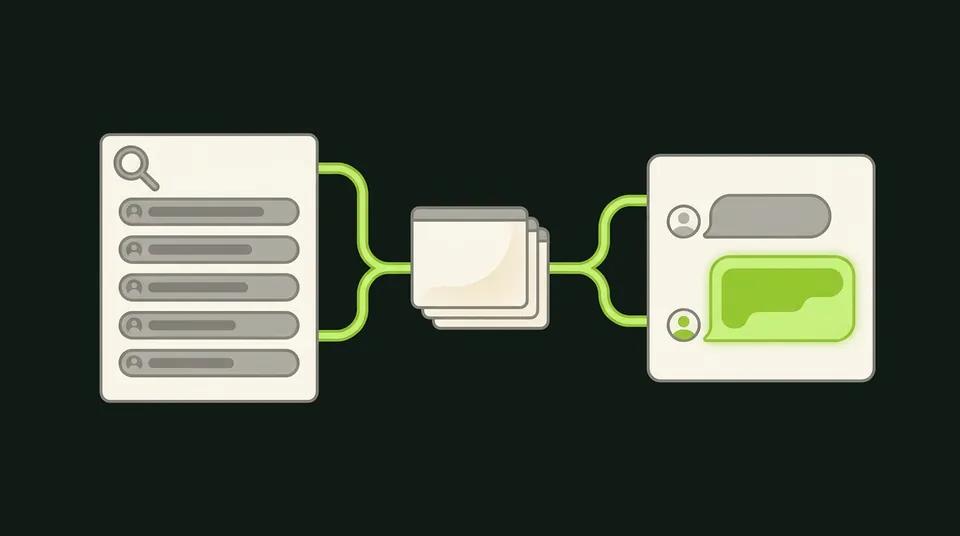
For a question like "best roofer near me", ChatGPT, Gemini and Google’s AI search the web, read a handful of pages and business listings, then write a short answer. The businesses in that answer are the ones whose pages and listings they found and trusted.
That’s why your Google rankings still matter. Google says a page must be indexed and eligible to be shown in Google Search with a snippet before its AI Overviews or AI Mode can link to it, and that the same foundational SEO best practices apply. A page Google can’t show in its results won’t be linked in its AI answers.
Google is still where most people look for a local service, and the blue links and the Maps list are still there under the AI summary. What’s new is that a growing number of buyers also ask an AI tool, or read Google’s AI summary first.
Both groups end up choosing from a short list. The job is to be on it in both places.
An AI answer often gives three to five names and stops. There’s no page two. If you’re not one of the names, that buyer never sees you.
So we track two things side by side: where you rank on Google, and whether the AI tools name you for the same searches.
Clear pages for each service and town, a site that loads fast and reads cleanly, mentions and links from other trusted sites, and a complete Google Business Profile. That’s been the work for years, and it’s still the work.
It now pays off in one more place. See how we do the Google side on our SEO services page.
What your buyers type
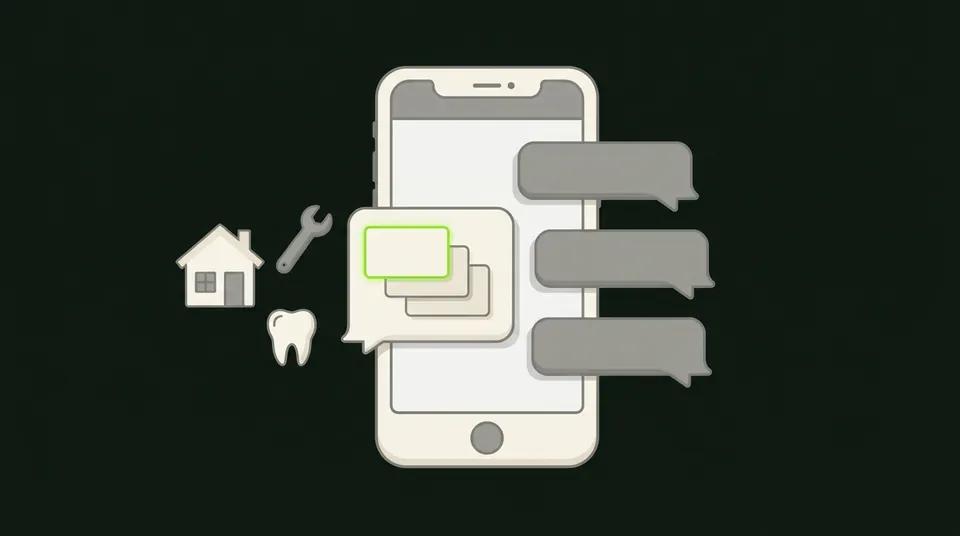
Buyers ask AI tools longer, more specific questions than they type into Google. They name the town, the problem and the budget, and they expect one clear answer. These are the kinds of questions we check for each client.
Plumbers, roofers, HVAC, electricians
Dentists, chiropractors, med spas, therapists
Law firms, mortgage brokers
Online stores, software, suppliers
Each question gets its own clear answer on your site: a page, or a section of one. That gives the AI tools something of yours to quote, and gives the buyer a reason to call you rather than the next name on the list.
Screenshots, not promises.
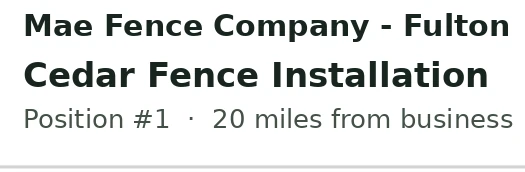
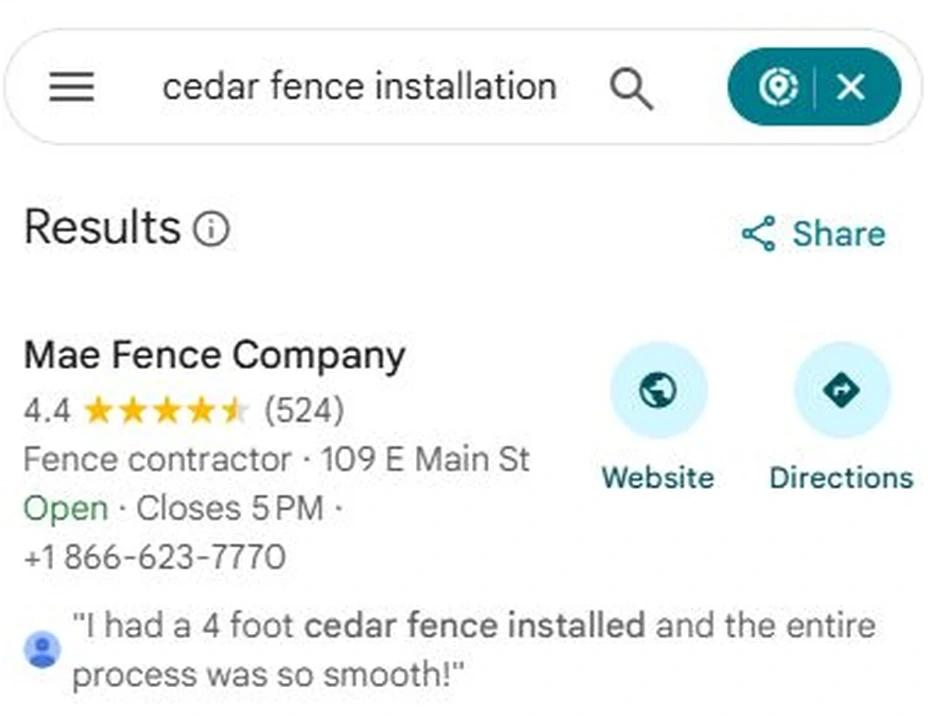
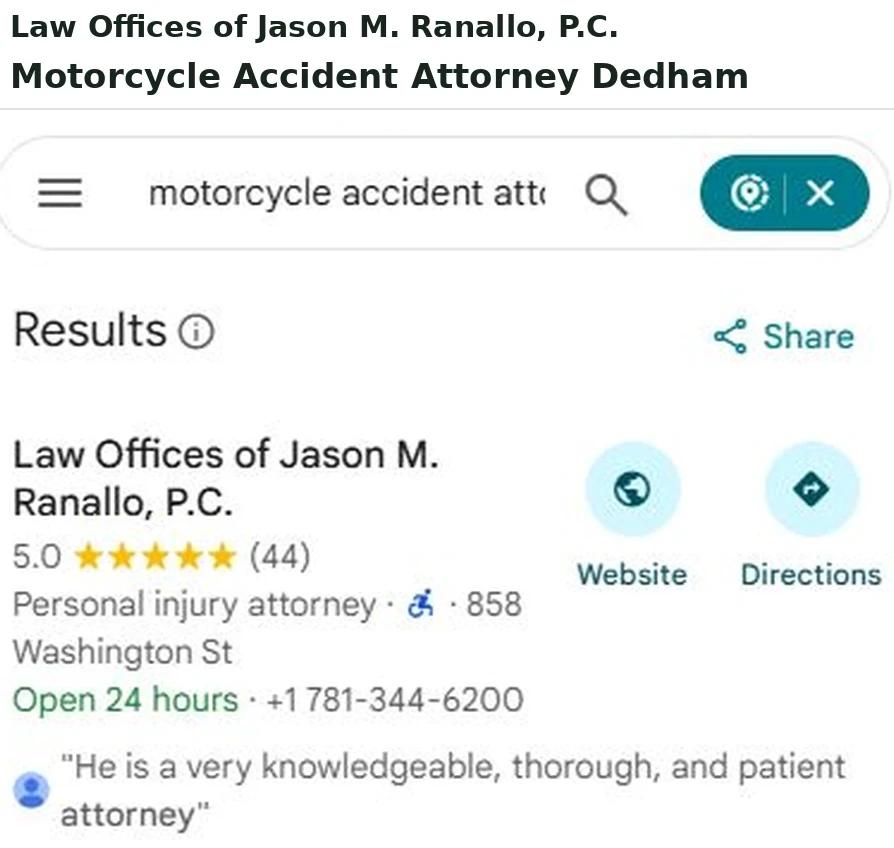
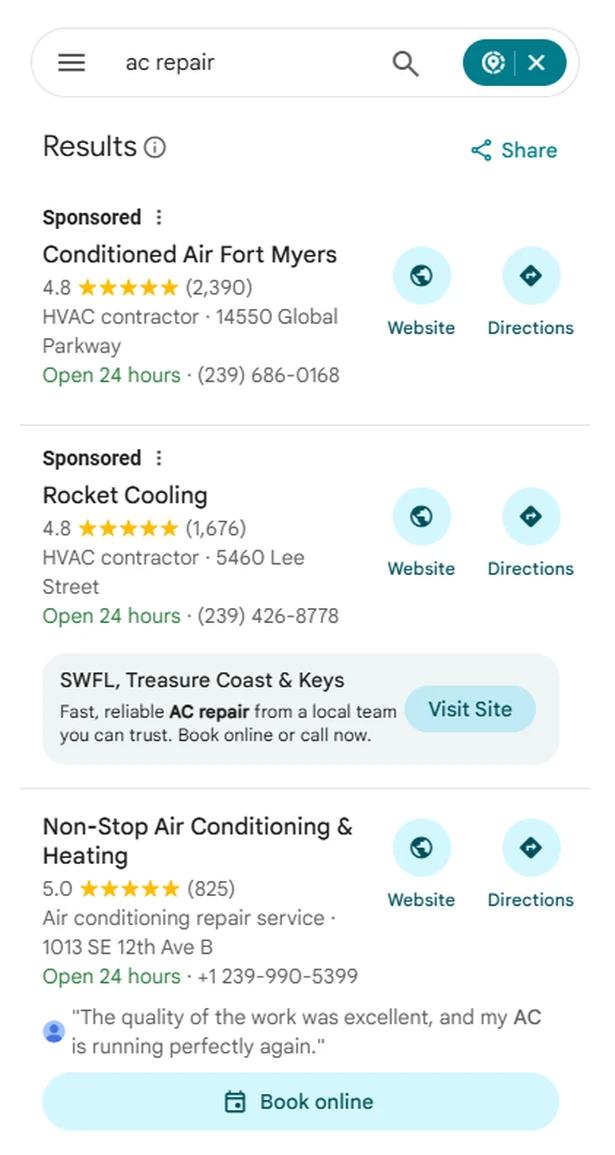
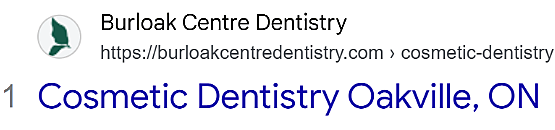
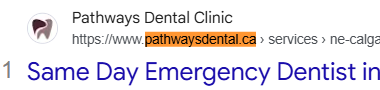
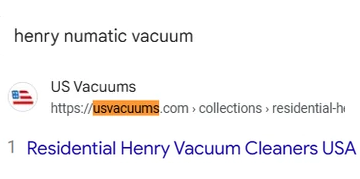
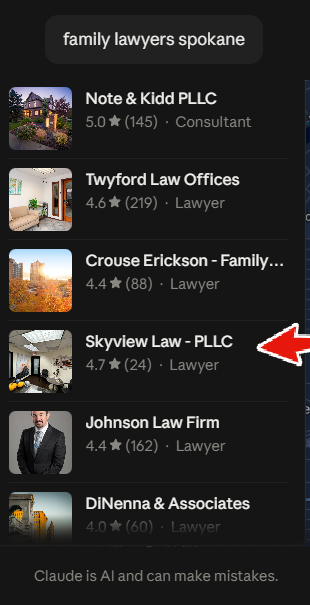
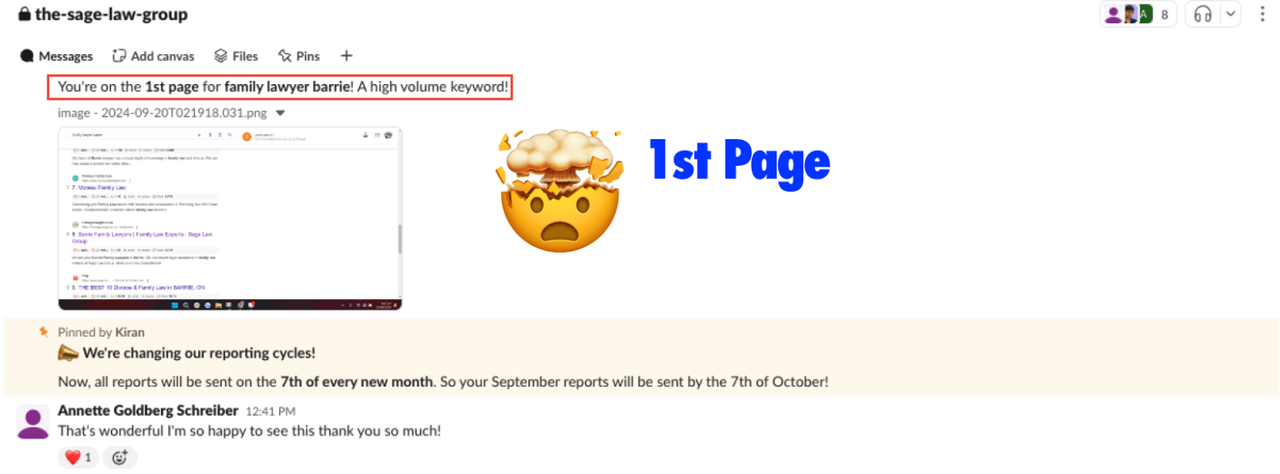
Real answers and real rankings naming businesses we’ve worked for, sorted by the four places your buyers look: Google’s AI Overview, ChatGPT, Google Maps and Google search. A selection from many, each cropped to the line that names the business.
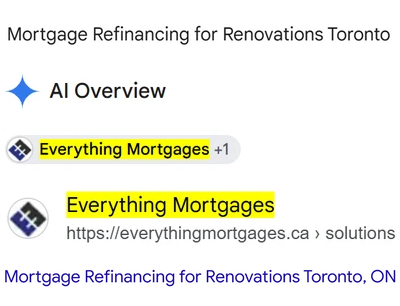
The box Google now writes above the results. When it names a business, it links straight to that business’s page.
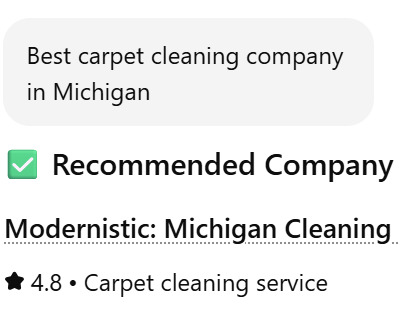
People type a whole question and get a short list back. The businesses on that list are the ones that get the visit.
The list under the map is where a local search starts, with a phone number on every row. Holding a place in it is work we do on every local plan.
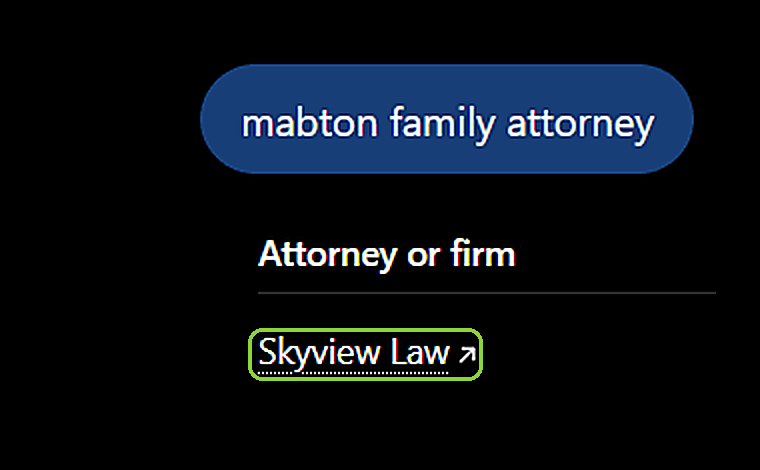
The ranked results under the ads and the AI answer. Every AI SEO plan is built on this work, and it is the part our written guarantee covers.
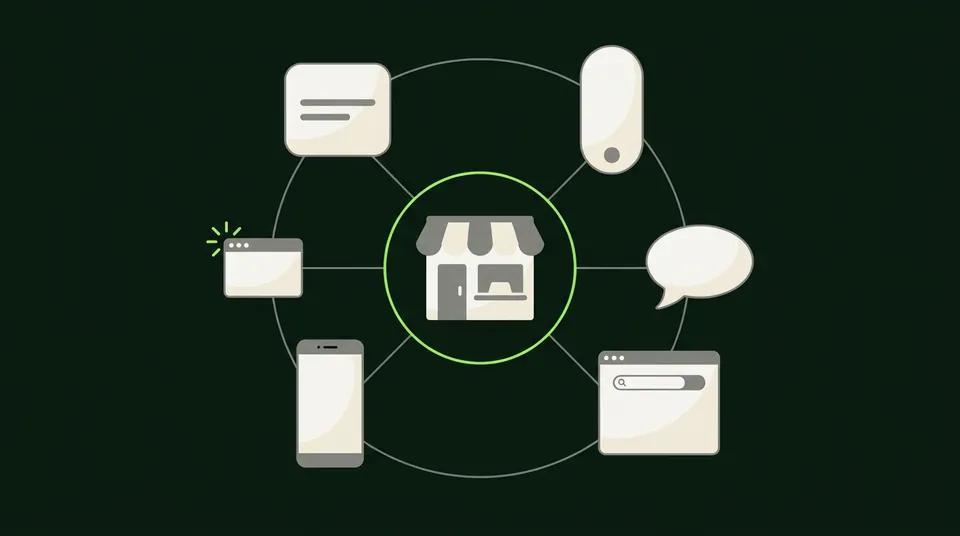
Six AI tools. Six ways to get named.
Each one picks businesses its own way. We cover all six, one by one. No single trick, no guesswork. Our own research on how differently they pick is just below.
The summary on top of Google results, and Google’s chat-style search. Both draw on pages Google already ranks, plus Google Business Profiles for local searches. Ranking on Google is the base, not the finish line.
What we do: rank your key pages on Google, and open each one with a plain answer the summary can quote.
Google AI Overviews SEO →It searches the web for questions about businesses, then gives a shortlist with links. A clear page for each service and city you cover gives it a page of yours to send the buyer to.
What we do: build those pages, and earn mentions on the sites ChatGPT reads when it looks up your trade.
ChatGPT SEO →It looks things up on the web and writes a short list, often quoting each business’s Google rating and review count. It names businesses whose name, address, phone and hours it can find on the pages it reads.
What we do: put your full business details on your own pages and match them across the directories it reads.
Google’s assistant, built on Google Search and Maps. The Google work is the base, but Gemini doesn’t copy the rankings: in our research, 34% of its first picks were in the Maps top 20 for the same search.
What we do: the Google work, plus a complete Google Business Profile with every service and area you cover.
It shows the websites it used, with links, in every answer. Pages that say plainly what you do, with the answer near the top, are the ones it sends buyers to.
What we do: rework your pages so the answer to each buyer question sits in the first few lines.
Built on Bing, Microsoft’s search engine. We make sure Bing can find every page of yours, so Copilot can recommend you too.
What we do: submit your site to Bing, fix what blocks it, and list you in the directories Bing trusts.
Our own research
Not often. For our Local Search Index 2026 we asked ChatGPT, Perplexity, Gemini and Google AI Mode to name the best business in 10 trades across 20 US and Canadian cities, 1,600 times over two days in November 2026. Then we checked every first pick against the Google Maps top 20 for the same search.
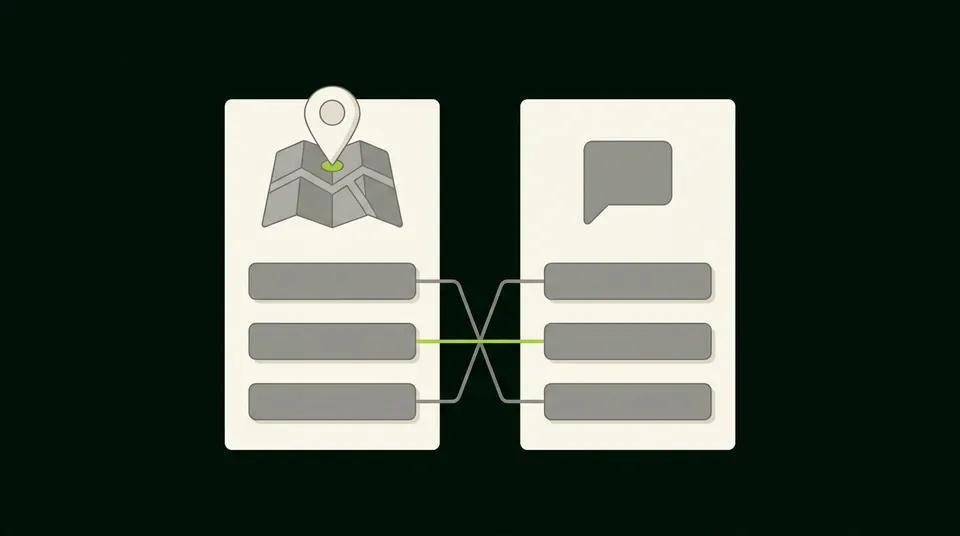
7%
of AI first picks were in the Google Maps top 3 for the same search (53 of 792 answers).
68%
were not in the Maps top 20 at all (541 of 792).
102 of 200
searches where no two of the four AI tools named the same business first.
42%
of first picks were the same when we asked again a day later (330 of 782).
Share of each tool's first picks found anywhere in the Maps top 20 for the same trade and city.
Source: Awkward Media Local Search Index 2026, 200 searches, November 2, 2026.
From what other websites say about you. Perplexity cited "best of" lists, directories and review sites again and again: prosgrade.com in 61 of 200 answers, consumeraffairs.com in 60, thumbtack.com in 47. ChatGPT leaned on angi.com, consumeraffairs.com and healthgrades.com.
A strong spot on the Maps list doesn’t carry over to AI answers on its own, and the reverse is true too. They’re two shop windows, and each needs its own work. Being listed, and described well, on the sites an AI tool reads for your trade is something we can work on with you. The Maps work keeps paying off: see local SEO.
The usual gaps
Most of the businesses we check do good work and still aren’t named. It’s rarely one big problem. It’s a few small ones that add up. These are the ones we find most often.

A single "Services" page that lists twelve things gives an AI tool nothing to quote for any one of them. A buyer asking about "emergency boiler repair" gets the business that has a page about exactly that.
If your pages never say which towns you serve, the AI tools can’t match you to "near me" questions in those towns. A line of text in the footer isn’t enough.
An old address on one directory, a different phone number on another, a business name spelled two ways. Each mismatch makes the AI tools less sure all those listings are the same business.
Your site says you’re the best. If no local paper, trade body or customer site says anything about you, the AI tools have only your word for it, and they tend to pick businesses others talk about.
Prices, areas covered and how to book hidden under three paragraphs about your history. The AI tools read the top of the page first. So do your buyers.
Pages that load slowly, show text only after a script runs, or block search engines by mistake. The AI tools can’t name a business whose pages they can’t read.
What we work on
We ask these tools thousands of questions, for our clients and for our own research. Here’s what the businesses they name tend to have in common.
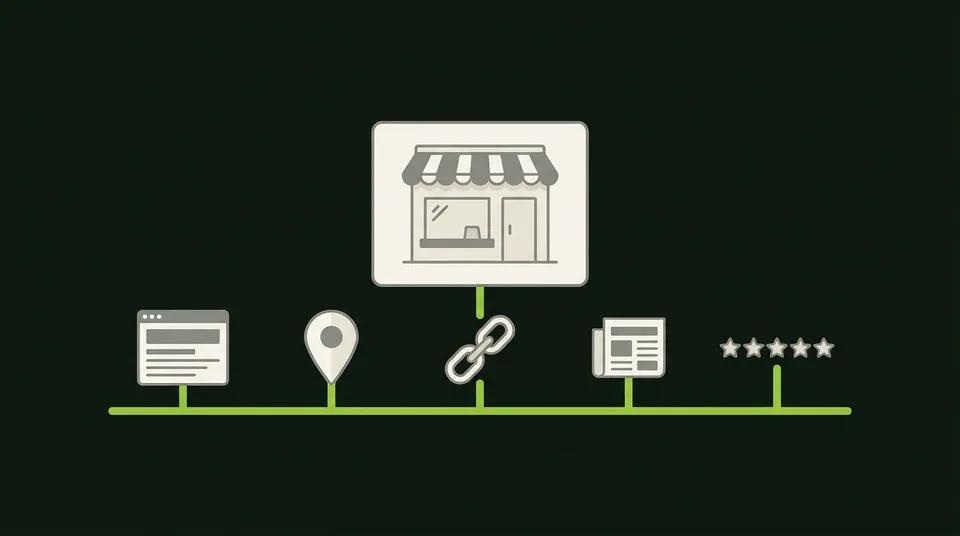
One page per service and per town you cover, each opening with a plain answer: what you do, where, for whom, and what it costs or how to book. AI tools quote pages that answer the question in the first few lines. See on-page SEO.
Local news, trade associations, "best of" lists, suppliers and directories. Each mention tells the AI tools you are real and known for something. This is our off-page SEO and link building work.
Your name, address, phone number and hours should match on your website, your Google Business Profile and every directory. When they don’t, the AI tools are less sure the listings are all you, and they pick someone they are sure of.
Categories, services, photos, hours and replies to reviews. Google’s AI and Gemini read it directly for local questions. See Google Business Profile optimization.
Some AI answers show star ratings and review counts, so reviews are easy to see. They’re one input, next to everything on this list, not the whole picture. A business with fewer reviews and better pages and mentions is often the one named.
Pages that load fast, show their text without waiting on a script, and don’t block search engines by mistake. Your web person can fix these, or we do it. See technical SEO.
Software or an agency?
Some of it. AI writing tools and SEO software can draft a page, suggest searches to target and flag problems on your site. What they can’t do is decide what your business should be known for, get other sites to mention you, or check that every claim on the page is true.

Draft a first version of a page. Suggest questions buyers ask. Spot missing page titles, slow images and broken links. Summarise what the pages above you cover.
Earn a mention in your local paper or a trade site. Fix your business details across dozens of directories. Decide which services and towns are worth a page. Stand behind a result in writing.
Every competitor gets the same suggestions and writes the same page. AI answers then have nothing to choose between, so they fall back on who is mentioned and trusted elsewhere. That’s work only a person can do: real facts, real photos, real outside mentions.
If you have time to write and publish pages every week, and your market is quiet, a tool plus your own effort can move you. If your competitors already rank and you’d rather run your business, that’s when an agency earns its fee. Not sure which you are? Ask us on the call. It’s free, and our plans are month to month.
What you may have heard
AI search is new enough that a lot of advice about it is guesswork. Here are the claims we hear most from owners, and what’s actually true as of November 2026.

No. ChatGPT now sells ads, but they sit below the answer, labelled "Sponsored", and OpenAI says ads don’t change what the answer says. Being named inside the answer can’t be bought. It comes from what ChatGPT finds about you on the web.
Some agencies sell a file called llms.txt as the key to AI search. Google says you don’t need to create new machine readable files, AI text files, or markup to appear in its AI Overviews and AI Mode. Your time is better spent on your pages.
Google says no special optimizations are needed to appear in its AI features, and points to the same advice it gives for Search: helpful, people-first content. So write for your buyers, with the answer near the top, not for a machine.
It builds on it. Google says the same foundational SEO best practices apply to its AI features as to Search, and the other AI tools read pages that search engines rank. The Google work now pays off in more places.
Not in our research. In 102 of 200 searches, no two AI tools named the same business first, and a day later the first name had changed in more than half the answers. The list is still open, and local firms are on it.
Reviews are one signal AI answers can see, next to your pages, your listings and what other sites say about you. Chasing reviews alone rarely moves you into an AI answer, or onto the Maps list.
On your free strategy call
Before we suggest anything, we look at what the AI tools say about your market right now. Here’s what happens on the call, step by step.
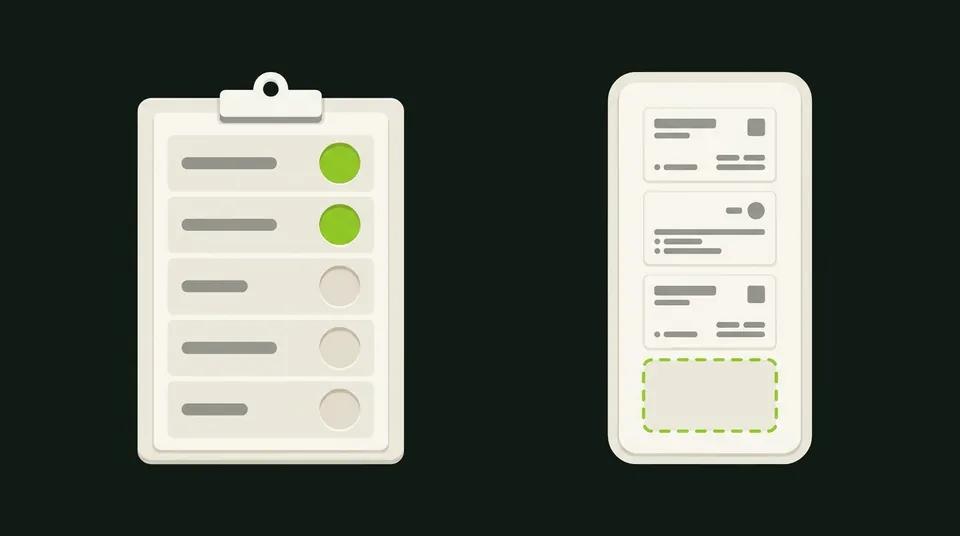
01
Things like "best family lawyer in Spokane" or "who installs vinyl fences near me". We agree them with you.
02
ChatGPT, Gemini, Claude, Perplexity and Google’s AI Overview and AI Mode. Same question, same town.
03
Those pages are your real competition in AI search. Often they are not the businesses you expected.
04
If you rank but aren’t named, the fix is usually on your pages. If you don’t rank, that comes first.
05
What to fix first, whether you work with us or not. 30 minutes on Google Meet, free, no prep needed.
Six jobs. Google first.
No secret prompt and no trick that works on one tool for a week. AI search rewards the same things good SEO always did, so we do those properly and shape them for the answers. Month to month, no long-term contract.
We put the questions your buyers type into ChatGPT, Claude, Gemini and Google’s AI, and record who gets named today. That is the starting line.
AI answers lean on pages that already rank. So the Google work comes first, with our 60-day page one guarantee behind it. Organic SEO
Each key page opens with a plain answer to the question, in a sentence an AI tool can repeat with your name on it. Then the detail, prices and proof below it.
Links and mentions from trusted sites in your field, plus reviews and a complete Google Business Profile. AI tools lean on them to decide who to name. Link building
So when someone asks for what you sell in your city, AI tools know it is you and send the call your way. Every page spells out what you do, where and for whom, and opens fast. Technical SEO
We ask the same questions again and show you where you are named, with screenshots, next to your Google rankings.
What happens after you sign
Google rankings are the base AI answers build on, so the first weeks go into the Google side. Here’s what the first three months look like.
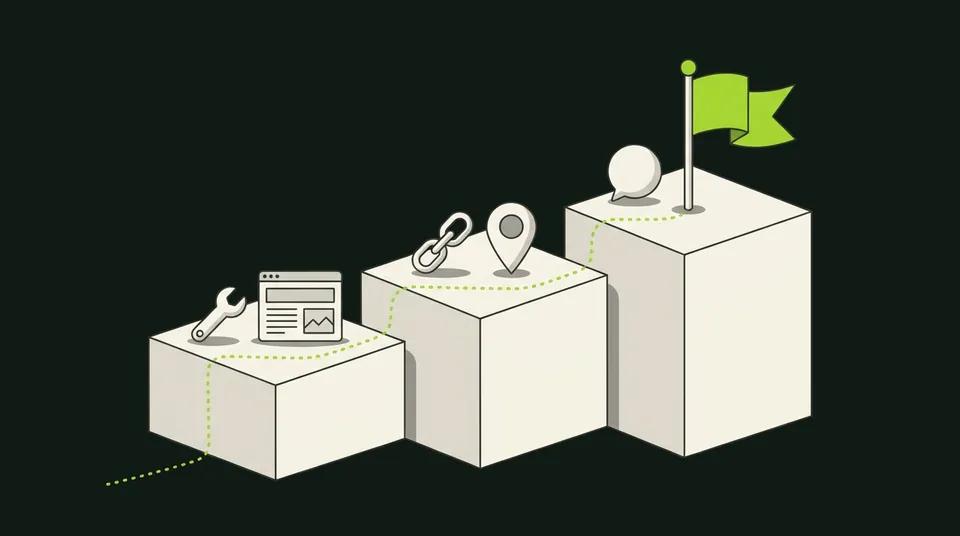
Days 1 to 20
We agree your qualifying keywords with you: the searches your buyers type. We fix the site faults that slow Google down, rework your key pages so each opens with a plain answer, and tidy your Google Business Profile.
Guarantee one: If you don’t see visible improvement in your key metrics within the first 20 days, we refund $200 on top of returning your payment for that period.
Days 21 to 60
We add the pages your market is missing, one for each service and town that matters, and start earning mentions on trusted local and trade sites. Your business details get matched across directories.
Guarantee two: If your qualifying keywords aren’t on the first page of Google within 60 days, we keep working for free until they are.
Month 3 and on
More searches, more towns, more questions answered. We keep asking the AI tools your buyers’ questions and show you, with screenshots, where you’re named next to where you rank, so you can see both move.
We guarantee Google. AI answers follow it.
Two guarantees, in writing, on your Google rankings. That is the base AI answers lean on most, so that is where we put our money.
Getting named by ChatGPT, Claude and Google’s AI is what we build on top. You see exactly where you stand, with screenshots.
Guarantee one
If you don’t see visible improvement in your key metrics within the first 20 days, we refund $200 on top of returning your payment for that period.
Guarantee two
If your qualifying keywords aren’t on the first page of Google within 60 days, we keep working for free until they are.
AI answers
Tracked across ChatGPT, Claude, Gemini and Google’s AI, with screenshots next to your rankings.
No long-term contracts. Results keep you here. Paperwork doesn't.
No guesswork
You see four things, side by side, in plain words. No logins, no charts you have to decode.
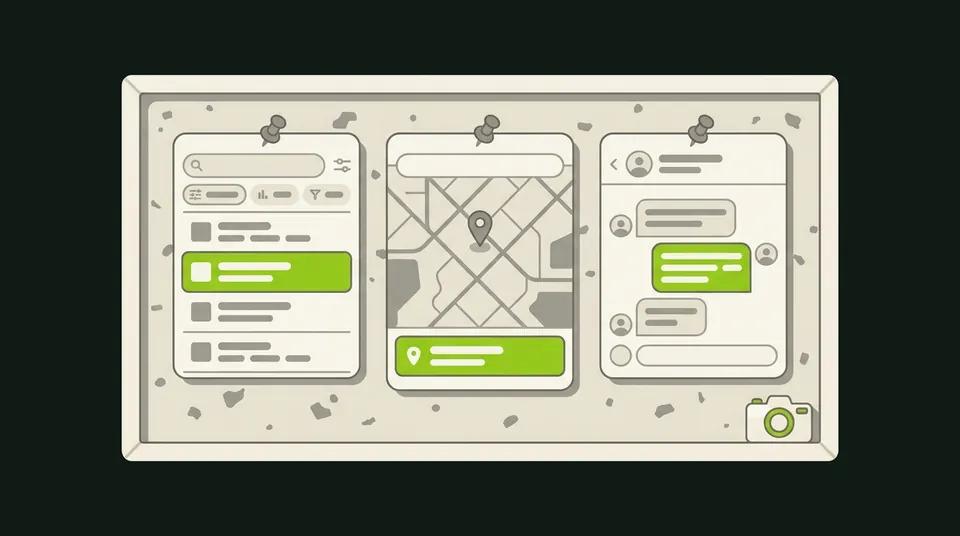
For each qualifying keyword, your position on Google and in the Maps list, with the date.
Screenshots of ChatGPT, Gemini, Claude and Google’s AI answering your buyers’ questions, in your town, with your name marked.
How many visitors reach your site from ChatGPT, Perplexity, Gemini and Google, and which pages they land on.
The pages added or reworked, the mentions earned and the fixes made, in plain words.
Real numbers. Before the call.
AI SEO is part of every plan, not a bolt-on sold separately. Your exact price depends on your market and how strong the sites above you are. These are the starting prices.
Google Maps, with AI SEO included
$1,497+
a month. Higher for multiple locations, websites and complexity.
Google rankings, with AI SEO included
$2,697+
a month. Higher for multiple locations, websites and complexity.
Side by side. Check it yourself.
Comparing AI SEO agencies? Every one of them says it gets you into ChatGPT. These are the things you can check before you sign, and how we answer each one.
Awkward Media
Price
On this page, before the call
Typical AI SEO agency: Usually on request after a call
Doing it yourself: Your time
Guarantee
Two written guarantees, at 20 days and at 60 days.
Typical AI SEO agency: Rarely any
Doing it yourself: None
Google rankings
Included. The base AI answers lean on.
Typical AI SEO agency: Often sold as a separate service
Doing it yourself: Up to you
Proof
Screenshots of real AI answers naming clients
Typical AI SEO agency: Often a chart of how many times you were mentioned
Doing it yourself: None yet
Contract
Month to month
Typical AI SEO agency: Often 90-day sprints or 6 to 12 months
Doing it yourself: None
Reporting
The same questions re-asked across AI tools, with screenshots, plus Google rankings, sent to you by email
Typical AI SEO agency: Often a dashboard
Doing it yourself: Manual checks
Before you hire anyone
Plenty of agencies added "AI" to their name this year. The comparison table above covers price, guarantees and contracts. These questions go one step further and sort the ones doing the work from the ones selling the label. Ask us too.
AI answers lean on pages Google ranks. An agency that only talks about AI and skips the Google side is building on sand. Ask what they do for your rankings, your Maps listing and your site.
A good answer is a written list of the searches your buyers actually type, agreed with you. Ours are your qualifying keywords, agreed on the first call.
Ask ChatGPT for "the best dentist near me" in Tampa and in Toronto and you get two different lists. An agency checking from its own office sees the wrong answer. We check from the towns you serve.
You want a list of pages, fixes and listings, not the word "strategy". Ours is in the timeline above.
Features in these tools come and go within weeks. Ask when they last re-checked how each tool picks businesses. We re-ask your buyers’ questions before we advise anything, so the advice matches what the tools do today.
It should. Clear pages, trusted mentions, matching business details and Google rankings pay off in Google’s results, its Maps list and every AI tool that reads the web. Ask for work that lasts, not a trick for one tool.
Local businesses
A homeowner asking an AI tool for “a fence company near me” or “a family lawyer in my town” gets a short list of named businesses, not ten pages of links. Several of the answers in the results above are exactly that: local trades and firms named for a local question.

Whether your pages say plainly which service you offer and which towns you cover. Whether your Google listing, the one that shows your business on Google Maps, has the same details. And what other local sites, directories and customers say about you. No single one of these decides it. Together they make the case.
For the towns you most want work from, yes: a real page that names the town, the jobs you do there and a few local details. A list of town names in the footer doesn’t give an AI tool anything to quote. We plan these with you so every page is one you’d stand behind.
The list under the map is still where a lot of local calls start, with a phone number on every row. Holding a place in it is part of every local plan we run. The details on your Maps listing are also some of what AI tools read about you. More on our Google Maps and local SEO pages.
No. A smaller town usually means fewer businesses competing to be named for the same question. What matters is that the AI tools can find clear, matching facts about you, wherever you are.
Any business whose buyers look for a provider before they call. We do this work for plumbers, roofers, dentists, law firms, landscapers, cleaning companies and many more.
No. They’re one of many things AI tools read about a business, next to your pages, your listings, your website’s standing and what other sites say about you. We treat reviews as one input in the plan, never the whole plan.
No. Many trades work from home or a yard and travel to the customer. Your Google listing can show the area you serve instead of a street address, and your pages name the towns. AI tools read both.
Usually your business name and a line about what you do, often with a link to your website or your Maps listing. From there they call, book or ask for a quote, the same way they would from any search.
Then we pick the towns that bring the jobs you want, build those first, and widen from there. You choose the order. The work follows where your best customers are.
Your trade
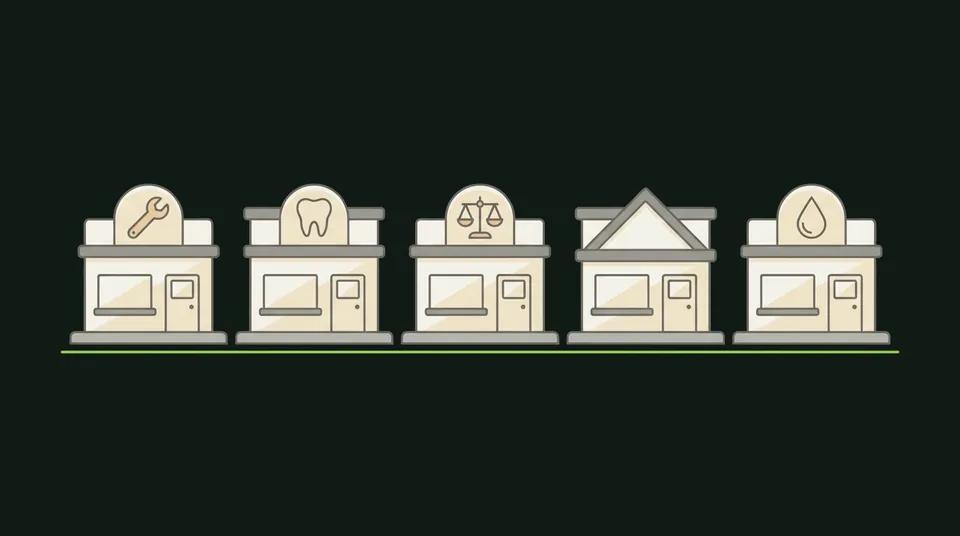
Any business whose buyers ask a question before they call: "who’s the best", "how much does it cost", "is it worth it". That covers most service trades. Each page below shows how the work looks for businesses in that trade, on Google and in AI answers.
Your city
AI answers to local questions change from town to town, so we check them in your town, not in general. Pick yours to see what we do there, or see the full list of locations.

Several locations? See multi-location SEO. Selling across the country? See our national SEO agency page.
Not a local business?
AI tools answer "what’s the best" questions for products and software as often as for plumbers. The work is the same at a bigger scale: a clear page for each product or service, mentions on the sites your buyers trust, and Google rankings across the country.

Product and category pages that answer the questions shoppers ask an AI tool before they buy: what it’s for, how it compares, what it costs. See ecommerce SEO and Shopify SEO.
Ranking and being named across every state or province you sell in, not just one city. See our national SEO agency page.
Buyers now ask AI tools for a shortlist of suppliers before they ever fill in a form. We make sure your pages give them a reason to put you on it. See B2B SEO.
A new site can wipe out years of rankings, and the AI answers that lean on them, if the move isn’t planned. See website migration SEO.
We don't take everyone. On purpose.
Very limited spots left for the month of November. We put a cap on clients we can take in to keep our promises. So we check every business first.
A good fit if
Not a fit if
Getting started
A short list, and most of it you already have. We do the work. You give us the access and the facts only you know.


Step 1
Your website and the listing that shows your business on Google Maps. If someone else built or runs your site, we send them the exact steps to copy and paste. It takes them a few minutes.

Step 2
Which services earn you the most, and which towns you want more work from. That sets the order we build in, so the first pages are the ones that matter most to you.

Step 3
Pictures from your phone, what the job was and the town it was in. Specific, real details are what make a page worth quoting, and they show a buyer you’ve done the work before.

Step 4
A new service, a new town, a price change, a busy season coming. A quick message is enough. We update the pages and listings so the answers about you stay right.
Once we have these, the first job is a written check of where AI tools name you today, question by question, and who they name instead. You see the starting point with your own eyes, so every change after it is easy to judge. On the free strategy call we run a few of those questions live, for your business and your town. What our guarantee covers is on our guarantees page.
Plain words
You don’t need any of these words to work with us. But you’ll hear them from other agencies, so here’s what each one means.

The short summary Google writes at the top of some search results, with links to the pages it used.
A tab in Google search where you ask a question and get a chat-style answer instead of a list of links.
When ChatGPT looks things up on the web before it answers, then shows the sites it used.
Work that gets your business into the short list an AI tool recommends. See our GEO page.
Work that makes your pages the answer to the questions your buyers ask. See our AEO page.
Short for large language model: the technology behind ChatGPT, Gemini and Claude.
A link or mention an AI answer gives to show where it got its information. Being cited sends you visitors.
Your free listing on Google Maps and in local results: hours, photos, reviews, services.
Labels added to your website’s code that tell search engines your name, address, services and prices in a format they read directly.
The searches your buyers type that our guarantee covers. We agree them with you on the first call.
Your next step
On a free call over Google Meet we ask ChatGPT, Claude and Google's AI about your market live, show you who gets named instead of you and why, and agree the qualifying keywords we would get onto the first page of Google. If your qualifying keywords aren't on the first page of Google within 60 days, we keep working for free until they are. The road map is yours to keep either way.
Bring with you
We search your market live
The way your customers do, in the towns you serve.
We show who's above you, and why
On Google, on Maps and in the AI answers.
You leave with a road map
Yours to keep. If we can help, we'll invite you to work with us.
For established businesses doing at least $20,000 a month.
Straight answers about AI search
AI SEO services are the work that gets your business named and linked in answers from AI tools such as ChatGPT, Claude, Gemini, Perplexity, Copilot and Google's AI Overviews. That covers ranking on Google, writing pages that answer buyers' questions plainly, earning mentions and links from trusted sites, and making your website easy for AI tools to read.
They overlap, and AI SEO is the umbrella. Generative engine optimization (GEO) gets your business into the short list an AI tool recommends. Answer engine optimization (AEO) makes your pages the answer to your buyers' questions. LLM SEO is another name for the same work. One plan covers all of them.
No. The work that gets you named in AI answers is the same work Google rewards: clear pages, trusted links and a site that reads cleanly. We build for Google first, so your rankings and your AI visibility grow together.
Our written guarantees are on Google, the rankings ChatGPT and other AI tools lean on. If you don't see visible improvement in your key metrics within the first 20 days, we refund $200 on top of returning your payment for that period. If your qualifying keywords aren't on the first page of Google within 60 days, we keep working for free until they are. Being named in ChatGPT, Claude and Google's AI is what we build on top, and we show you, with screenshots, where you're named.
Google rankings are the base it builds on. Our guarantees cover the first 20 days and the first 60 days on Google. AI answers tend to pick you up as those rankings and your mentions on other sites grow.
Usually you need better pages more than more pages. We rework your key pages so each one opens with a plain answer to the question your buyers ask, then add pages where a service or city has none.
AI SEO is included in every plan. Google Maps starts at $1,497 a month. Google rankings start at $2,697 a month. Both go up for multiple locations, multiple websites and complexity. Month to month, no long-term contract.
We ask ChatGPT, Claude, Gemini and Google's AI the questions your buyers ask, in your town, record which businesses are named and which pages are linked, and repeat it. You see the screenshots next to your Google rankings.
AI tools can draft pages, suggest searches and flag site problems. They can't earn mentions on other sites, fix your details across directories or stand behind a result. Most businesses use both: tools for speed, people for the work that makes AI answers trust you.
It's not dead. AI answers mostly draw on pages that already rank on Google, so the same work now pays off in Google's results, its Maps list and the AI answers on top.
Have a clear page for each service and town you cover, opening with a plain answer. Get mentioned on trusted local and trade sites. Keep your business details the same everywhere. Rank on Google for the same searches.
Rank on Google for the search first: the AI Overview mostly links pages Google already trusts. Then make sure the page answers the question in its first few lines, in plain words.
Usually not. Most sites need better pages and a few technical fixes, not a rebuild. We tell you on the strategy call if yours is the exception.
They're one signal among many. Some AI answers show star ratings, so reviews are easy to see, but pages, mentions on other sites, business details and Google rankings matter as much or more.
In smaller towns fewer businesses have done this work, so the short list in an AI answer is often easier to get onto.
No. Every plan is month to month, with no long-term contract.
Access to your website and Google Business Profile, a list of the services and towns you want more work from, and 30 minutes on the first call to agree your qualifying keywords.
It builds on it. If they rank you on Google, that's the base. AI SEO adds checking what the AI tools say about your market, and shaping your pages and mentions so they name you too.
Your free check
Where should we look?
We use these to build your search and find your business on Google.
For businesses already doing $20k a month or more.
We’ll email it within 1 working day. Requests on Saturday or Sunday go out Monday. Look for an email from Awkward Media, and check your spam folder if it isn’t there by then.